The festival of Mahashivratri is celebrated every year across India with deep devotion and reverence. On this sacred day, devotees visit Shiva temples, offer bel leaves on the Shivling, observe fasts, and remain awake through the night as an expression of their devotion to God Shiva.
Yet, beyond rituals and traditions, Mahashivratri gently invites us to reflect on the deeper meaning behind Shiva’s Night. It encourages us to explore who God Shiva is and why His remembrance is associated with a night of awakening, rather than a conventional birthday celebration.
Godly Message on Shiv Jayanti
Mahashivratri, also known as Shiv Jayanti, is regarded as one of the most spiritually significant festivals of the world. It commemorates the divine descent of the incorporeal, point-of-light Supreme Father, Supreme Soul Shiva.
According to spiritual understanding, God Shiva descends at a time when moral values decline and humanity experiences inner unrest. During such periods, He imparts true spiritual knowledge, to help reawaken humanity’s original values of peace, purity, and harmony.
Through this knowledge, He re-establishes the Adi Sanatan Deity way of life, while bringing an end to unrighteousness, corruption, and confusion that characterise the final phase of the Iron Age.
In this way, God Shiva is remembered as the Guide and Liberator of souls (Mukti and Jeevan Mukti Data), the One who leads humanity towards lasting peace and spiritual fulfilment.
The Present Time: A Period of Inner and World Transformation
The present time is seen as a Confluence Age—a unique transition between the end of Kaliyuga (Iron Age) and the beginning of Satyuga (Golden Age). It is viewed as a time of renewal, when the limitations of the old world gradually give way to the possibility of a purer and more harmonious future.
During this significant period, Supreme Soul God Shiva carries out His task of inner purification and transformation of humanity through the medium of Prajapita Brahma by teaching the practice of Easy Rajyoga Meditation.
A Gentle Call for Inner Awakening
Trimurti God Shiva lovingly reminds humanity that this time is precious. He invites us souls to rediscover our original nature and to claim our spiritual inheritance of peace, purity, and inner sovereignty for the coming era.
Rather than a message of fear, this is understood as a call for awareness—a reminder that inner change cannot be postponed indefinitely. The present moment offers a rare opportunity for self-transformation and spiritual awakening.
This essence forms the heart of the message of Mahashivratri and Shiv Jayanti.
Understanding God Shiva
Across India, countless temples are dedicated to God Shiva, where He is worshipped in the symbolic form of a Shivling. Some of the most revered Shiva temples include Amarnath (Jammu & Kashmir), Somnath (Gujarat), Vishwanath (Varanasi), Mahakaleshwar (Ujjain), and Pashupatinath (Nepal). The names and symbolism of these sacred places reflect Shiva’s divine attributes and universal role, pointing towards His identity as the Supreme Soul.
Ancient traditions narrate that Shri Rama worshipped God Shiva at Rameshwaram, and Shri Krishna offered prayers at Gopeshwar in Vrindavan. These memorials still exist today and gently indicate that God Shiva is revered as the Supreme Father of all deities.
The Incorporeal Form of God Shiva
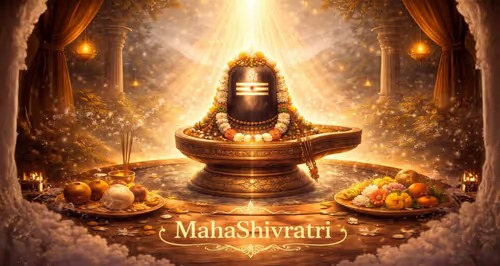
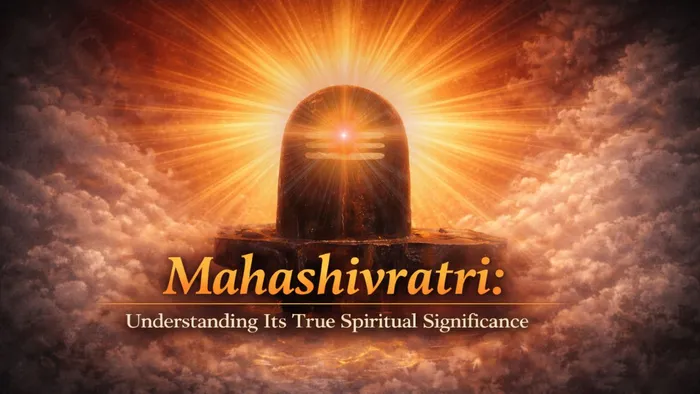
God Shiva is represented as a linga, symbolising His incorporeal nature. Unlike human beings, He does not possess a physical male or female form. He is understood to exist eternally as a conscious point of divine light. For this reason, the twelve major Shiva shrines are known as Jyotirlingas, highlighting His luminous, formless identity. He is also referred to as Trimurti, indicating His role in inspiring the functions of creation, sustenance, and transformation through the subtle deities Brahma, Vishnu, and Shankar.
Symbolism & Qualities Associated with Shiva
The three horizontal lines often seen on the Shivling symbolise several spiritual attributes:
Trimurti – inspirer of creation, sustenance, and transformation
Trinetri – who gives the third eye of knowledge to souls (it is not a physical eye, but divine knowledge)
Trikaldarshi – knower of past, present, and future
The word “Shiva” itself means Benefactor. He is remembered as One who brings benefit to all souls by guiding them towards liberation (Mukti) and liberation-in-life (Jeevan Mukti).
Why Is Shiva Remembered Through a Night?
A thoughtful question naturally arises—when the births of deities and saints are celebrated as birthdays, why is Shiva remembered through a night?
Spiritually, the night symbolises a period of darkness caused by ignorance, when moral and spiritual values decline. God Shiva, known as the Ocean of Knowledge, is believed to descend during this darkest phase to guide humanity from ignorance to understanding, and from confusion to clarity.
God’s descent is described as occurring whenever righteousness declines and humanity seeks renewal.
God’s Role at the Confluence Age
God Shiva is believed to perform His divine role during the Confluence Age, the most delicate phase of the world cycle. Unlike human beings, He does not take birth through a mother’s womb. Instead, He works through the human medium of Prajapita Brahma, using that body as an instrument to impart spiritual knowledge and guidance and to establish the divine heavenly world. In a world facing increasing unrest, immorality, and disconnection, when ethical and moral values have declined drastically, this guidance centres around a simple yet profound message: “Be Yogi and Be Pure” meaning,
to live with inner purity and remain connected to the Divine through Rajyoga.
This understanding is shared through the teachings of Brahma Kumars and Brahma Kumaris, who are spiritual students of this wisdom.
The Deeper Meaning of Fasting on Shivratri
From a spiritual perspective, fasting (Upvaas) on Shivratri is understood as more than abstaining from food.
Upvaas literally means staying close—remaining inwardly connected to God through remembrance and awareness.
Similarly, the true meaning of Jagaran (awakening) is to awaken from the sleep of ignorance and to consciously protect the self from negative tendencies such as lust, anger, greed, ego, and attachment.
The Inner Message of Mahashivratri
Mahashivratri symbolises the descent of divine knowledge into a world experiencing spiritual darkness. The term night represents the concluding phase of the Iron Age (Kaliyuga)—a period often associated with suffering, confusion, violence, and the gradual loss of human values.
God Shiva, eternally existing in His incorporeal form of divine light, is remembered as descending at such a time to guide humanity towards renewal. His descent is associated with granting Mukti (liberation from sorrow) and Jeevan Mukti (liberation while living), and with offering souls their God-Fatherly inheritance of peace, purity, and lasting happiness.
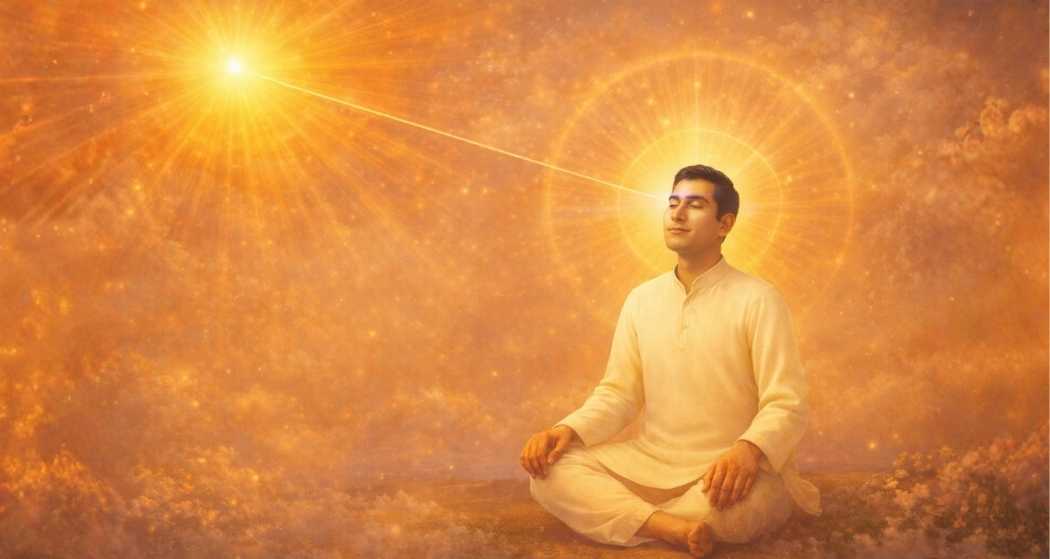
Through the teaching of Rajyoga Meditation, God Shiva helps souls reconnect with their inner strength and clarity. This spiritual knowledge enables individuals to understand:
- Their true identity as eternal souls, beyond the body and roles
- God Shiva, and His benevolent role in world transformation
- The world cycle and the drama of time, including the changing ages of the world
In this way, God Shiva is regarded as the Unique Satguru—not only imparting knowledge, but also guiding humanity as the Supreme Father, the Supreme Teacher, and the Supreme Guide, leading souls from ignorance to understanding and from unrest to inner peace.
The essence of God Shiva’s guidance is often summarised in a simple yet powerful reminder:
“Be Holy and Be Yogi.”
When practised sincerely, this message will lead to a life of inner freedom, balance, and peace—described as Jeevan Mukti. It also symbolises the spiritual inheritance of a pure and elevated future, often referred to as the Golden Age.
This is the timeless message and blessing associated with Mahashivratri.