
In today’s fast-paced world, education has become increasingly focused on career-oriented skills. While professional knowledge is essential for building a successful career, an equally important aspect of education is often overlooked: learning how to live a fulfilling, balanced and meaningful life.
This imbalance reminds us of the wisdom of the ancient Gurukul system, which emphasized holistic education. Students were prepared not only to earn a living and fulfil professional responsibilities, but also to develop values, compassion, spirituality and the wisdom needed to live well.
True education, therefore, is not only about learning to make a living; it is also about learning to live.
The Gurukul System: A Holistic Approach

The traditional Gurukul system offers an inspiring example of holistic education. Students were taught administrative and strategic skills necessary and their education went beyond professional knowledge. It also nurtured values, spirituality, compassion and a sense of responsibility. This approach helped prepare individuals who could not only lead effectively but also understand and empathize with those around them. Success was therefore not limited to professional ability; it also included character and contribution to society.
Modern Education: A Shift in Focus
In contrast, modern education predominantly prepares students for professions such as engineering, medicine and business. While professional expertise is essential, the strong emphasis on individual success can sometimes push values and life skills into the background.
The focus can gradually shift from “we” to “me”—from community and collective well-being towards individual achievement.

As a result, professionals may become highly skilled in their fields while lacking qualities such as compassion, empathy, integrity and emotional balance. Professional knowledge determines what we can do, while our values influence how we choose to do it.
The Importance of Value-Based Education
The need for value-based education becomes especially visible across different professions.

Consider the medical profession. A doctor may possess excellent medical knowledge and technical skills, but healing involves more than treatment alone. Compassion and empathy are also integral to the experience of care. Similarly, every profession requires ethical values alongside technical expertise. Education that combines professional competence with integrity, compassion, responsibility and respect can help individuals become successful professionals who also contribute positively to society.
The Role of Values in Professional Life
Values play a crucial role in shaping professional conduct.
Two professionals in the same field can approach their work very differently, depending on their personal values. Their decisions, priorities, relationships and responses to challenges are influenced by the principles they follow. For example, one professional may prioritize personal gain, while another may give equal importance to honesty, fairness and the well-being of others.
This highlights the importance of developing a strong value system. Professional knowledge gives us the ability to perform our responsibilities, but values guide how we use that ability.
Education for Life, Not Just a Living
The focus on earning a livelihood has contributed significantly to financial and professional progress. However, when education focuses primarily on external success, relationships, emotional well-being, mental peace and overall life satisfaction can take a backseat.
A person may have a successful career and financial stability while still experiencing an inner sense of emptiness.
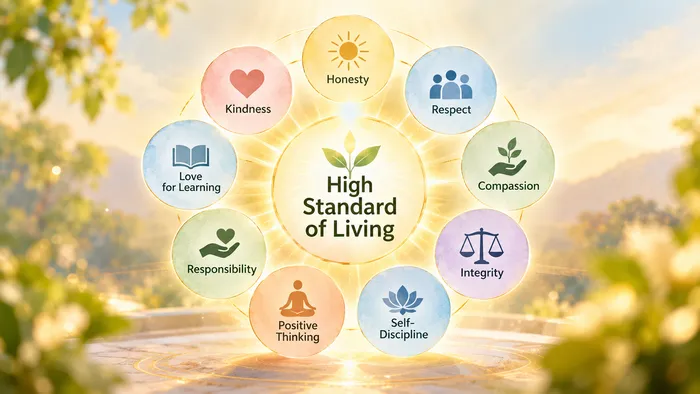
This is why education should teach us not only how to earn, but also how to live. Learning life skills, values and emotional awareness alongside professional knowledge can help create greater balance between outer achievements and inner well-being. A high standard of living is therefore not determined only by income, possessions or professional status. It is also reflected in the quality of our thoughts, relationships, choices and character.
Bringing Values Back Into Education
Value-based learning should begin at an early age, both at home and in schools. Children can be encouraged to understand the importance of compassion, honesty, respect, responsibility, and empathy. It is equally important to help children understand the difference between healthy achievement and excessive competition.

When values are nurtured alongside academic and professional skills, children can grow into individuals who are successful while remaining connected to their principles and responsibilities towards others. This can help create a more balanced, ethical and compassionate society.
A Higher Standard of Living Begins Within
The need for an education system that balances professional skills with life skills is more pronounced than ever. By drawing inspiration from the Gurukul system and prioritizing value-based education, we can create a society of well-rounded individuals. These individuals will not only excel in their careers but also contribute positively to their communities, leading a life that’s truly rich in every sense.
Reflection:
- How can we incorporate value-based learning in modern education systems?
- In what ways can professionals balance their career ambitions with ethical practices?