
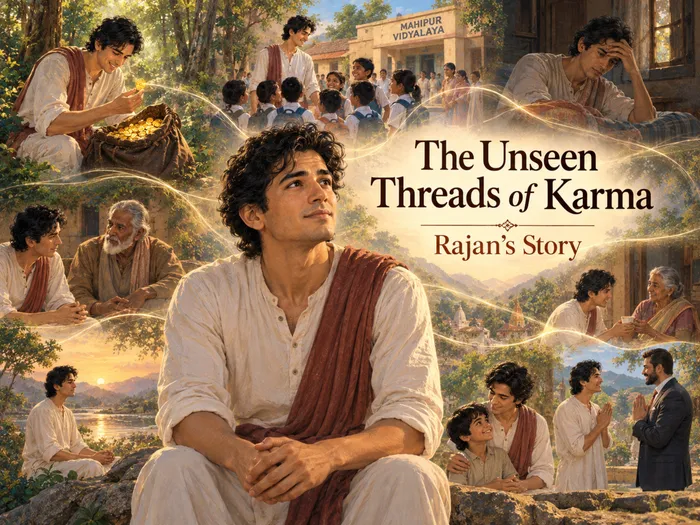
Karma is a fundamental concept in philosophy and spirituality that teaches us about the law of cause and effect. It emphasizes that our actions, whether good or bad, have consequences that follow us, influencing our present and future lives. Understanding the law of karma helps us take responsibility for our actions and strive to lead a life of kindness, compassion, and integrity.
This karma story of Rajan explores how actions and their consequences can be connected through unseen threads and how self-reflection, compassion, and righteous living can bring inner peace.
Story: The Unseen Threads of Karma
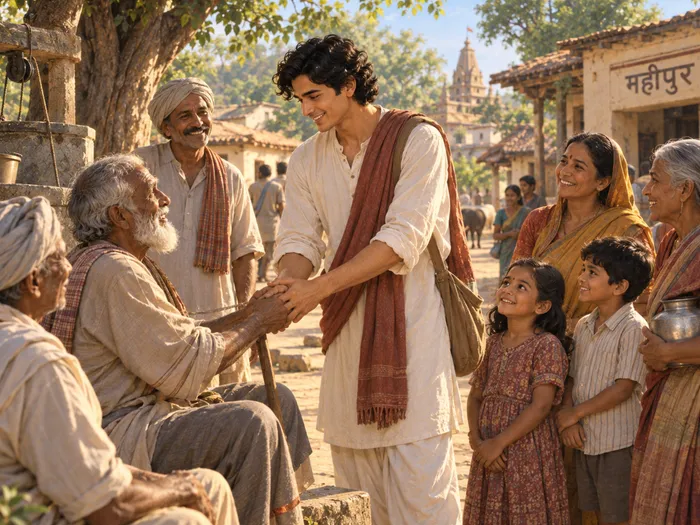
In the serene village of Mahipur, there lived a young man named Rajan. Rajan was known for his kindness and generosity. He always helped the villagers with their problems and never asked for anything in return. His selfless actions earned him immense respect and love from everyone.
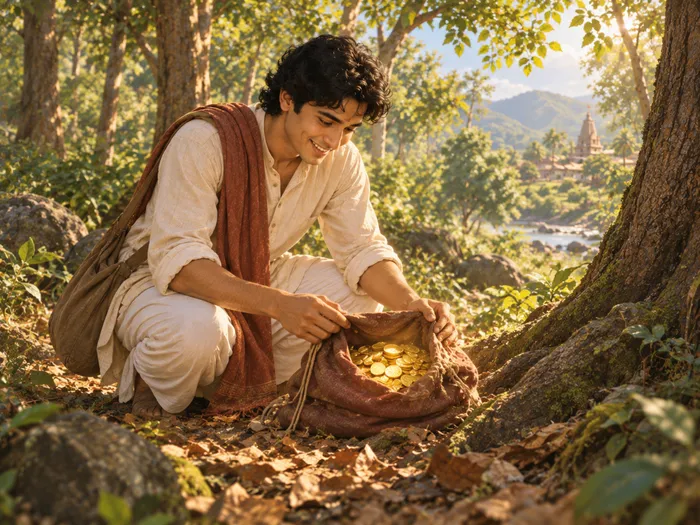
One day, while walking through the forest, Rajan found a bag of gold coins. Overjoyed, he thought about all the good he could do with the money.
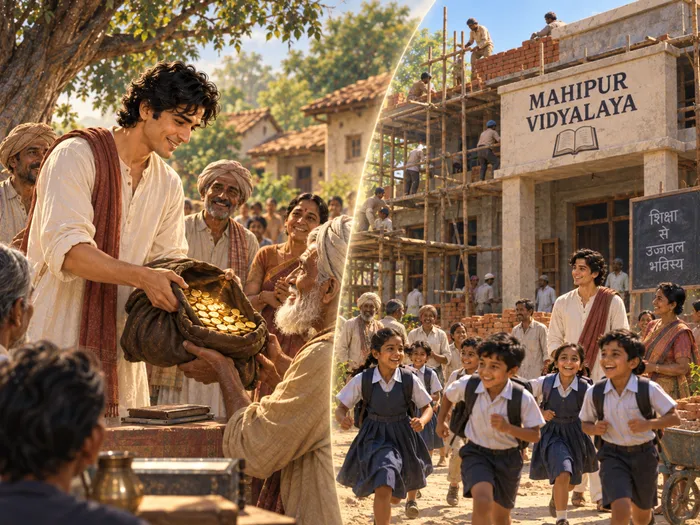
He decided to donate the entire amount to build a school for the village children. The school brought a wave of happiness and prosperity to Mahipur, and Rajan was hailed as a hero. His generosity appeared to be a beautiful example of good karma through selfless actions.
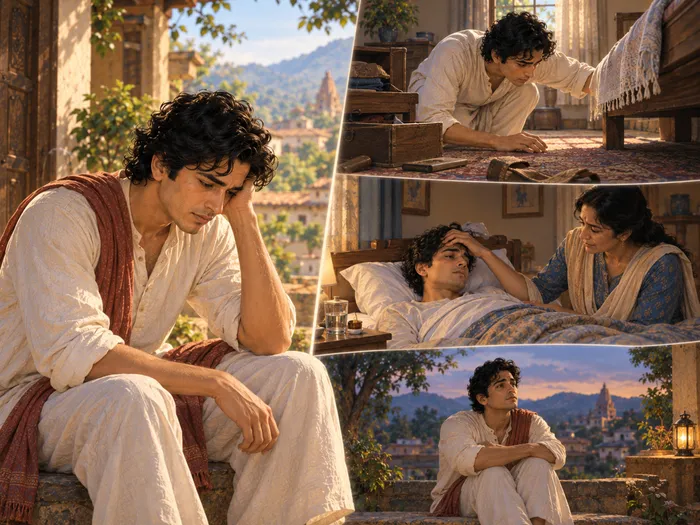
Years passed, and Rajan’s fame as a benevolent soul spread far and wide. However, as time went on, Rajan started noticing strange occurrences. He began losing things mysteriously, his health started deteriorating, and he felt an unexplained heaviness in his heart. Despite his good deeds, misfortune seemed to chase him relentlessly.
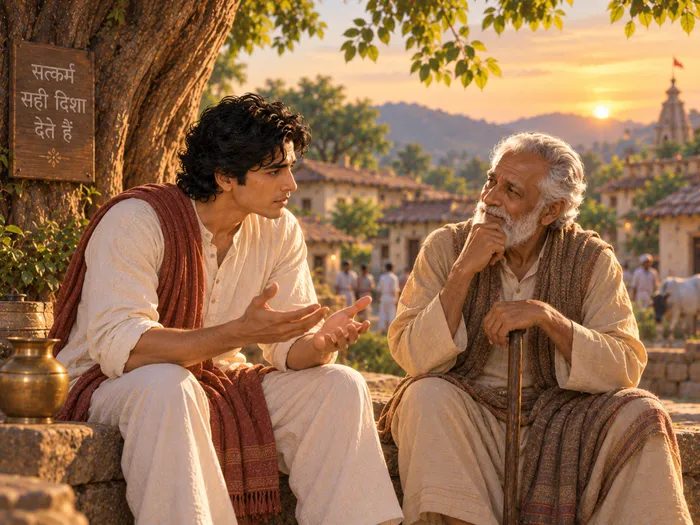
One evening, Rajan met an experienced villager named Arvind, who had lived in Mahipur for many decades. Arvind was known for his wisdom and had a reputation for providing sound advice. Seeking answers, Rajan shared his troubles with Arvind. The old man listened patiently and then said,
“Rajan, karma is a complex web. Sometimes, our past actions return to us in unexpected ways.”
Intrigued, Rajan asked, “But I have always tried to do good. Why is this happening to me?”
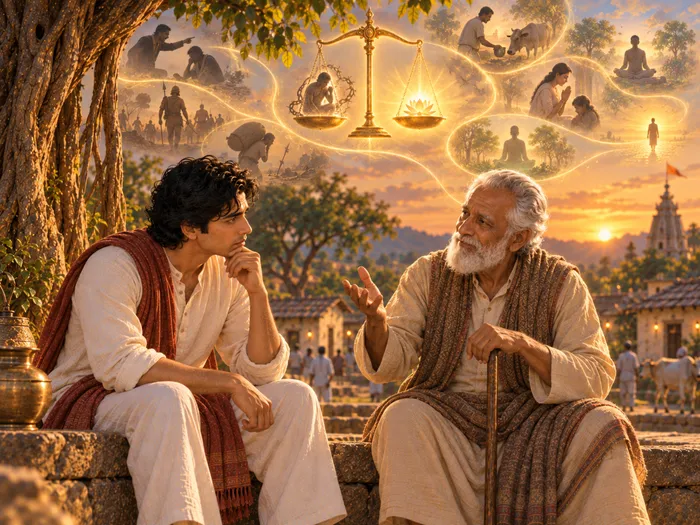
Arvind replied,
“Every soul carries the sanskars, imprints of past actions, within. These sanskars influence our present life, sometimes in ways we cannot understand.
"Your current troubles might be the result of actions from a previous life, balancing the scales of karma.”
His words gave Rajan a deeper perspective on past karma, sanskars, and the consequences of actions. Rajan was puzzled but determined to find clarity. Arvind advised him to reflect deeply on his life, to seek forgiveness for any wrongs he might have committed unknowingly, and to continue living righteously.

Rajan followed the advice and spent days in contemplation, seeking inner peace and understanding. Through self-reflection, he tried to understand the deeper lessons hidden within his experiences.
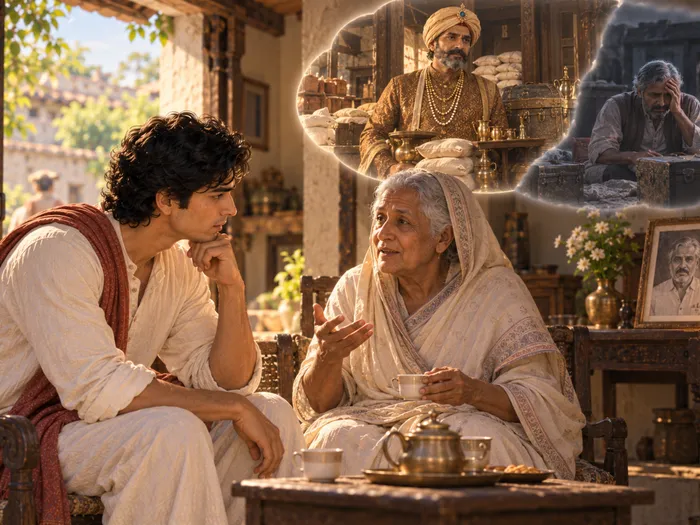
One day, while helping an elderly woman named Leela, he felt a strange familiarity with her house. Leela, noticing Rajan’s discomfort, invited him in for tea. As they talked, Rajan learned that Leela’s late husband, Ravi, had been a wealthy merchant who had mysteriously lost his fortune many years ago.
Leela shared that Ravi had always suspected foul play but never discovered the culprit. Rajan listened intently and felt a deep connection to the story.
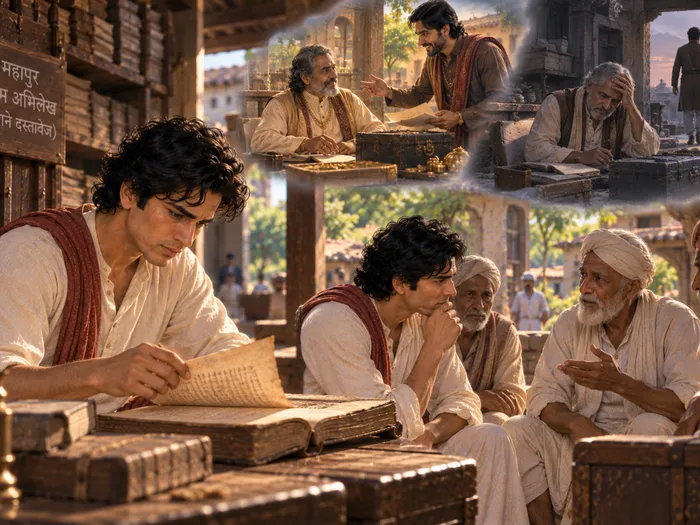
He decided to investigate further. Rajan visited the village archives and spoke to the elders, piecing together the story of Ravi’s downfall.
He discovered that many years ago, a young man had deceived Ravi, leading to his financial ruin. This young man had vanished, leaving Ravi to rebuild his life from scratch. Rajan realized that the young man’s actions had set off a chain of events that ultimately affected him in his current life.
For Rajan, this realization revealed the deeper meaning of karma and cause and effect—how actions can create consequences that may unfold in unexpected ways.
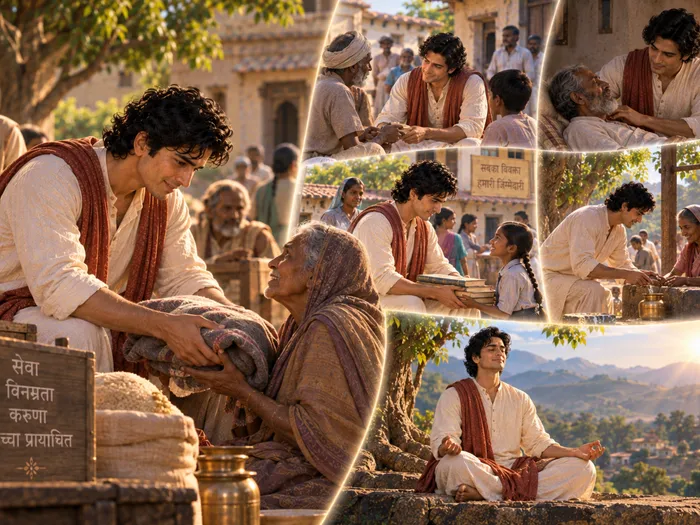
Feeling remorseful, Rajan decided to make amends. He intensified his efforts to help others, but this time with a deeper sense of humility and compassion. He sought out those who had suffered due to Ravi’s misfortune, helping them in any way he could. Slowly, he noticed a change. His health improved, and the mysterious losses stopped. Peace returned to his heart.
His journey showed him that understanding karmic consequences was not simply about looking at the past. It was also about choosing kindness, humility, compassion, and righteous actions in the present.
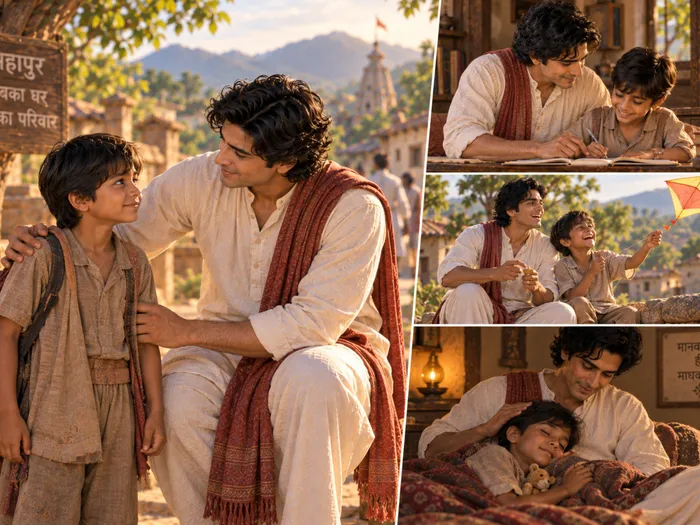
One day, a young boy, Arun, arrived in Mahipur. He was orphaned and had nowhere to go. Rajan took him in and treated him like his own son. Arun brought immense joy to Rajan’s life, and the two became inseparable.
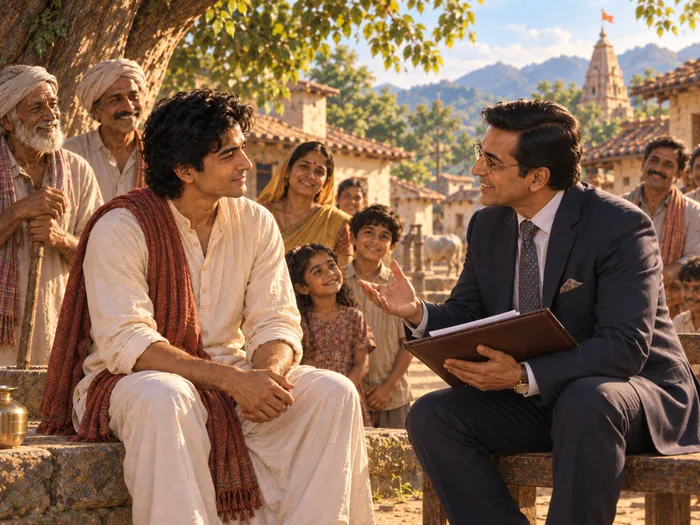
Many years later, a prosperous businessman came to the village, looking for Rajan. He introduced himself as the grandson of a man who had suffered severe health issues due to Rajan’s unintentional mistake in his childhood. The businessman had heard about Rajan’s transformation and his good deeds. Touched by Rajan’s genuine remorse and efforts to make amends, the businessman offered Rajan a partnership in his thriving enterprise.
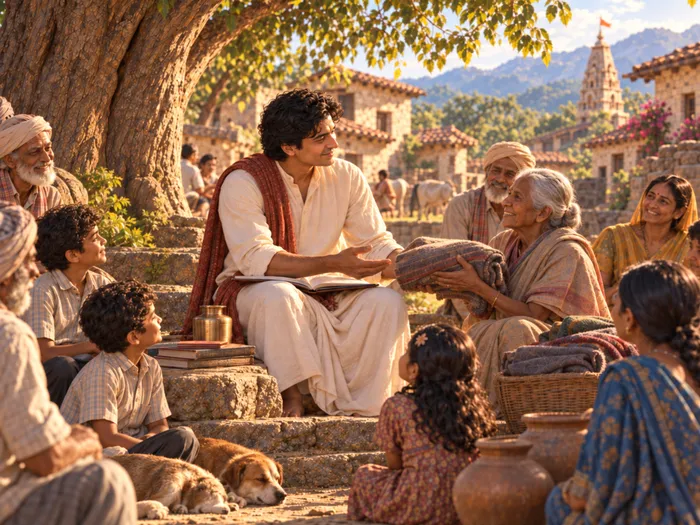
Rajan, now enlightened by his experiences, politely declined the offer. He chose to continue his simple life in Mahipur, helping others and teaching the villagers about the profound lessons he had learned about karma, compassion, responsibility, and spiritual growth.
The Deeper Message of Rajan’s Karma Story
Rajan’s journey reminds us that the unseen threads of karma are not always easy to understand. We may not immediately see how every action connects with its consequence, yet every choice gives us an opportunity to become more aware of the way we live and the effect we have on others. The story also teaches an important lesson: understanding karma should not make us fearful of the past. Instead, it can encourage self-reflection, personal responsibility, forgiveness, compassion, and positive action.
Rajan could not change what had already happened. What he could change was the way he chose to live in the present. Rather than becoming bitter because of his suffering, he became more compassionate. Rather than seeking rewards for his good deeds, he learned to serve with humility.
That transformation became the greatest reward of his journey.
Ultimately, the law of karma reminds us to become conscious of our thoughts, words, and actions. Each moment gives us another opportunity to choose kindness over resentment, compassion over indifference, and integrity over selfishness. We may not always see the threads that connect one action to another, but we can choose what kind of threads we create today.

From Karma to Clarity: Explore Your Beliefs
Rajan’s journey changed when he paused to reflect on the beliefs shaping his understanding of life and karma. What beliefs may be quietly influencing your thoughts, choices and actions? Let's take a few moments for self-reflection with Belief Clarity activity and discover what you truly believe.
Assess Yourself Now