

Have you ever wondered why some habits seem so hard to break — even when you know they are not good for you?
In today’s fast-paced digital world, habits shape our daily behaviour. From checking notifications to stress eating or mindless scrolling, many actions happen automatically. The good news? Your brain can change.
Neuro-Associative Conditioning (NAC) is a powerful behaviour change method that helps you break bad habits and build healthier ones by retraining your brain.
Let’s understand how it works — in simple, practical terms.
What is Neuro-Associative Conditioning?
Neuro-Associative Conditioning (NAC) is a technique that helps you change habits by linking actions with strong emotional consequences.
Your brain learns through association. When you repeat a behaviour, your brain connects:
Trigger → Action → Reward
For example:
Feeling bored (trigger) → Checking your phone (action) → Temporary relief or stimulation (reward)
Over time, this loop becomes automatic. So NAC works by breaking such negative associations, creating new positive associations and rewiring the brain using neuroplasticity.

The Science Behind NAC: Neuroplasticity
Neuroplasticity is your brain’s ability to form new neural pathways over time.
Every time you repeat a thought or action, you strengthen a pathway in the brain. That’s why habits feel automatic. The more you practise a new response, the stronger the new pathway becomes — and the weaker the old habit gets.
This is how real, long-term behaviour change happens.

How Neuro-Associative Conditioning Works (Step-by-Step)
- Identify the Trigger : Every habit begins with a cue — stress, boredom, fatigue, or a notification sound. Awareness is the first step
- Interrupt the Pattern : Pause before reacting. This small gap weakens the automatic response
- Replace the Response : Choose a healthier action. Instead of:
Scrolling → Read one page
Stress eating → Deep breathing
Negative self-talk → Positive affirmation
- Reinforce with Emotion : Celebrate small wins. Positive emotion strengthens the new behaviour.
Repetition + emotion = rewired brain.
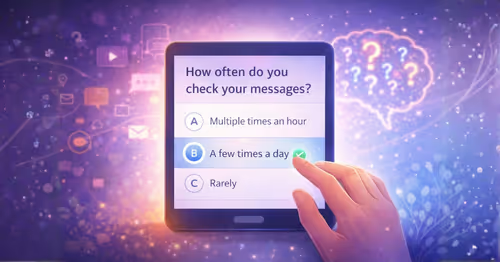
Digital Wellness Assessment
You now understand how habits are formed. But how healthy are your digital habits? Take this quick Digital Wellness Assessment to discover your triggers and behaviour patterns — and see where you stand.
Start NowEveryday Examples of Neuro-Associative Conditioning
Let’s look at a few examples to see how NAC can work in everyday situations:

Reducing Phone Distractions
Trigger: Notification sound
Old Habit: Immediate phone checking
New Response: Turn off notifications and check at scheduled times
Reward: Better focus and productivity
Over time, your brain associates ignoring notifications with feeling accomplished.

Managing Stress Without Overeating
Trigger: Stress after work
Old Habit: Reaching for snacks
New Response: Walk, stretch, or drink water
Reward: Feeling lighter and more in control
Gradually, stress becomes linked to calming techniques instead of food.

Reducing Social Media Scrolling
Trigger: Boredom
Old Habit: Opening social media
New Response: Read, journal, or do a short activity
Reward: Mental clarity and reduced screen time
This is especially powerful for digital wellness and attention control.
Why Neuro-Associative Conditioning Works
NAC works because it links every action with its result. The brain simply records repeated experiences and response according to the associations we create. In that sense, the brain works almost like a “Tathastu machine” — whatever meaning we repeatedly give to an action, it gradually accepts and strengthens.
So, when we link an unhealthy digital pattern with loss of focus, inner heaviness, and dependency, it gradually becomes weaker and https://www.brahmakumaris.com/meditation/youth/daily-habitssupports long-term digital addiction recovery.
In a world full of distractions, this skill gives you control over your attention and choices.

How to Apply NAC in Daily Life
NAC can make a real difference, but it takes practice and patience. Habit change is not instant — but it is possible. Here are some steps to help you get started:
- Start Small, Stay Consistent : The more often you choose the new response, the stronger it becomes. Aim for daily practice
- Be Patient : Forming a new habit takes time so celebrate small wins along the way
- Track your progress
- Practice Positive Self-Talk : Self-affirmation strengthens your belief in your ability to change
Final Thoughts
Neuro-Associative Conditioning isn’t only for people who feel “addicted” or stuck. It’s useful for anyone who wants to understand how habits form and how the brain learns through patterns.
Once you see how triggers and rewards shape your daily choices, you can start improving small things—like focus, routines, screen use, health, or self-talk—without forcing yourself or relying only on willpower. Think of NAC as a practical skill for modern life: it helps you respond with awareness, not autopilot, and build habits that support who you want to become.
Small daily changes can lead to powerful long-term transformation.