
Navratri is a time when we celebrate the Shiv Shaktis, remembering their strength and virtues. We often see the Devi depicted with eight arms, each holding an alankar (a symbolic oject). These eight arms represent eight inner powers that we, as souls, already have within us. But what do these powers mean in our daily lives? This Navratri, let us look beyond the symbols and understand how these powers can help us
What if every situation in life also brought with it the power we need to handle it? The situations that trouble us most are not always major ones. A single comment can stay on our mind all day. We may have a decision to make, yet keep going back and forth between two options. We may know that someone is simply acting according to their nature, but still feel deeply affected by something small they say. At other times, everything may look fine on the outside, while the mind is so noisy that we can barely hear our own inner voice.
This brings us to an important question: Does my peace depend on what is happening around me, or do I have the inner strength to remain steady even in the middle of a difficult situation?
Spirituality explores this deeply through the idea of self-sovereignty. I am a conscious being — a soul — who thinks, understands, chooses and acts through the body. Self-sovereignty means learning to become the master of my own mind, intellect, habits and senses, rather than allowing circumstances to control my inner state.This leads to a powerful question:
Am I in charge of the situation, or has the situation taken charge of my state of mind?
The Eight Powers offer a practical way to understand and respond to these everyday situations. At first, they may seem like eight separate abilities. Look more closely, though, and they begin to form a complete system for managing our inner world.
One helps us regain control of the mind.
One teaches us to leave the past where it belongs.
One helps us make room for differences in relationships.
One brings clarity to the intellect.
One gives direction to our actions.
One helps us stand steady in front of a challenge.
One connects our strength with the wellbeing of others.
And one helps us remain above the influence of a situation.
What makes these powers especially useful is that we do not need them only during major life challenges.
We may need one while reading a WhatsApp message. During a small conversation at home. While making a decision at work. When an old hurt returns. While facing a difficult medical report. When someone speaks harshly to us. Or simply when we are alone with our own thoughts before going to sleep.
So the journey of the Eight Powers is not really about gaining control over situations outside us. It is about understanding ourselves and learning to govern our inner world. And there is something even more important to understand: these are not simply personality traits or coping skills. They are powers of the soul. The soul is the one that thinks, understands, chooses, feels and acts through the body. So when we speak of the power to discern, decide, tolerate, face or cooperate, we are speaking about capacities that belong to the soul itself. These powers already exist within us in seed form.
Spiritual practice does not create something entirely new. It awakens and strengthens what is already within the soul.
Once we understand this, the way we look at difficult situations begins to change. Instead of asking,
“Why is this happening to me?”
we can begin to ask: “Which power within me does this situation need me to awaken?”
Then a situation becomes more than something we simply have to get through. It becomes an opportunity for the soul to recognise its own strength — and bring that strength into action.

The Power to Withdraw
The mind does more than react to what happens. It often takes one small event and builds an entire story around it in the mind. Someone says something. We think, “Why did they say that?” Then, “Maybe they have always thought this way about me.” Then, “Perhaps other people think the same thing.” Within minutes, one sentence has turned into ten different thoughts. This is where the Power to Withdraw becomes important. Withdrawing does not mean ignoring what happened. It means creating a little inner distance so that we can look at the situation instead of getting completely caught up in it. Rajyoga describes a subtle practice:
“One moment engaged with the world, the next quietly turned inward.”
This is more than simply becoming quiet. It is the ability to move our attention where we choose, instead of letting every situation pull it along.
The deeper meaning of this power
We often assume that another person caused our disturbance. But a large part of that disturbance may have come from everything our mind added after the actual event. The Power to Withdraw teaches us to ask:
“How big is the actual situation, and how much bigger has my mind made it?”
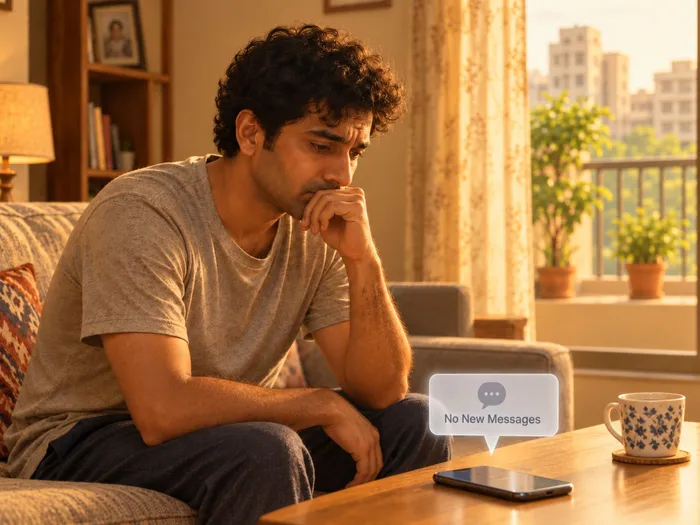
That is where inner freedom begins. For example, you are waiting for a reply to an important message. The only fact is that the reply has not come. But the mind starts filling in the blanks: “Maybe they are upset with me.”...“Maybe I said something wrong.”...“Maybe I am not important to them.”...
The Power to Withdraw reminds us that , “Right now, I know only one thing: there has been no reply. Everything else is something my mind has added.” Sometimes recognising this is enough to change our state of mind.
Is withdrawing the same as running away?
No. Taking one step back from a situation is very different from escaping it. We escape because we are afraid to face something. We step back because we want to see it clearly. Escaping says, “I do not want to deal with this.” whereas withdrawing says, “Let me first become steady, so I can deal with this properly.”
That is why the Power to Withdraw often supports the powers of discernment, decision and facing. If the mind is already disturbed, our judgment may become biased. We may make a decision in the heat of the moment. We may turn facing a situation into a confrontation. When we first return to ourselves, the next step is usually clearer.
How is this different from the Power to Pack Up?
The two can look similar, but there is a subtle difference. If the situation is still happening and I need to step back from it, I need the Power to Withdraw. And, if the situation is over and I now need to stop carrying it inside me, I need the Power to Pack Up.

The Power to Pack Up
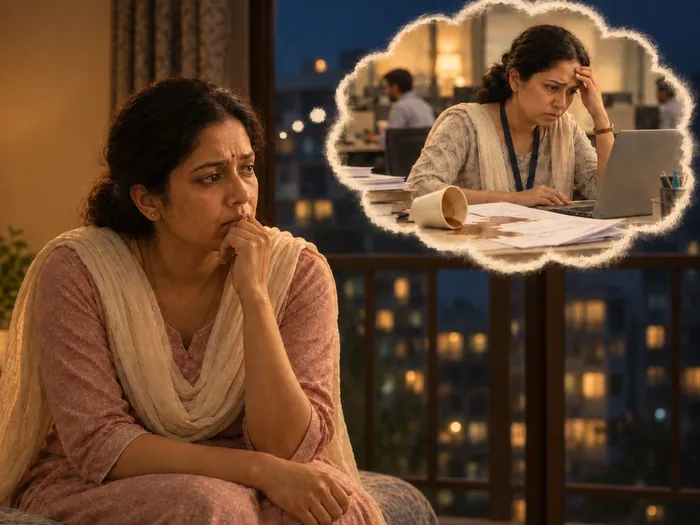
Often, it is not the work we do that leaves us tired. It is everything we continue carrying in the mind after the day is over. An old conversation...A mistake...Something someone said...An attempt that did not work out...An expectation that was not met...
The problem or situation itself may have lasted five minutes. The mind can keep it going for five days.
The Power to Pack Up brings that mental energy back into the present. It does not mean forcing ourselves to forget. It means consciously choosing to keep the lesson and let go of the weight. Rajyoga gives special importance to putting a full stop to what was unnecessary in what we saw, heard or did.
Packing up is not forgetting
If an experience has taught us something, forgetting the lesson would not be wise. But repeatedly replaying the experience and blaming ourselves is not wise either. To pack up is to turn memory into learning. Suppose you make a mistake at work. You look at where your preparation fell short and understand what you need to do differently next time. The mistake has now taught you what it needed to teach.After that, continuing to think, “What must everyone be thinking about me?” is no longer learning. It is mental weight.
A deeper understanding: Separating the event from your identity
Sometimes we do more than remember a mistake. We start using it to define ourselves. “I made a mistake” slowly becomes: “This is just who I am.” The Power to Pack Up separates what happened from who we are.
One failure does not decide your future.
One poor reaction does not define your whole personality.
One difficult relationship is not your entire life story.
So packing up is not only about stopping a thought. It is also about not allowing an old event to control the way we see ourselves today.
Packing up is not suppressing
There is an important difference here. If an emotion comes up and we push it down without understanding it, that is not packing up. Before closing something, we need to ask ourselves honestly: “What do I need to learn from this? Is there anything that still needs to be clarified? Is there something I still need to do?”
If the answer is yes, that action may need to happen first. If the answer is no, then closing the file is the strength. At the end of the day, one simple question can help:
“Am I carrying anything from today into tomorrow that I no longer need to carry?”
If the answer is yes, the mind may be asking for the Power to Pack Up.

The Power to Accommodate
Many difficulties in relationships do not come from something being wrong. They come from people being different.
Someone does not think the way we do.
They do not work at our pace.
Their priorities are not the same as ours.
Here, the mind can quickly conclude: “This is not right.” The Power to Accommodate invites us to ask:
“Is this really wrong, or is it simply a different way from mine?”
That is where inner spaciousness begins. We can understand the Power to Accommodate through the example of an ocean. Rajyoga helps us develop a state in which the heart becomes big or deep enough to transform even something unhelpful from another person into a feeling of goodwill within ourselves.
Accommodation is not agreement
This is important.
Accepting that another person thinks differently does not mean agreeing with them. Understanding someone's nature does not mean saying that every behaviour is right. Accommodation means: “I can see your reality without losing my own inner stability.”
If a boundary is needed, we can set one. If something needs to be made clear, we can speak clearly. But we do not need to keep bitterness or complaint alive inside. As an example, Two colleagues work together. One notices every small detail. The other quickly sees the bigger picture. The first may see the second as careless. The second may see the first as unnecessarily slow. The Power to Accommodate helps us recognise that different working styles do not always have to create conflict. Sometimes they can complement each other.

A deeper layer: not storing people in mental files
We may say nothing outwardly, yet keep collecting impressions inside:
“They said that to me that day.”
“They always do this.”
“I cannot trust them.”
To accommodate means not allowing one behaviour or expression from another person to become a permanent impression in our mind.
The connection between accommodation and tolerance
These two powers are closely related. If someone's behaviour is happening right now and I need to stay stable without being affected by it, I need the Power to Tolerate. If I have understood that person's nature or difference and do not want to store it as a complaint, I need the Power to Accommodate. Tolerance protects our inner state in the moment. Accommodation keeps the heart open in the relationship.

The Power to Discern
Today, the problem is often not a lack of information but too much of it. A single situation can bring ten opinions, pieces of advice and reactions. This can make it difficult to see clearly. Someone may be speaking from their experience or one option maybe from someone very close to us or another option may look very attractive. This is when we need the Power to Discern. It asks:
What is true?
What is simply my fear?
Is this attraction, or is it genuinely beneficial?
Am I looking at the person, or at the actual issue?
Do I have enough facts yet?
Discernment is not about judging people
The Power to Discern does not mean putting labels on people. It is not about deciding who is superior or inferior. Real discernment checks the self as well.
“Is my own desire influencing the way I see this?”
“Am I being partial because of a relationship?”
“Is an old experience affecting how I am seeing the present situation?”
This is what makes discernment a spiritual power.

A deeper layer: recognising subtle attraction
Rajyoga also teaches us to notice the finer forms of attraction connected with things and circumstances. Attraction is not always an obvious desire. Sometimes it is simply a quiet feeling of, “I like this.” So discernment is not always about a clear choice between right and wrong.
Sometimes the questions are more subtle: “Why does this appeal to me?” “Is this connected with my values, or with the appreciation I may receive?” “Do I want this because it is convenient, or because it is genuinely beneficial?”
As an example, two opportunities are in front of you. One may bring more recognition and appreciation. The other may not be as visible, but it may be more closely aligned with your values. The question is not simply which job or opportunity to choose. The deeper question is:
What truly matters to me?
That is discernment.
The difference between discernment and decision
The distinction is important.
Discernment asks: “What is right?”
Decision asks: “What am I going to do?”
If we do not discern first, our decision may be rushed. If we discern but never decide, we can get stuck in endless thinking. A clear intellect eventually needs the courage to act.

The Power to Decide
Sometimes we already know what is right, yet still do not move forward.
Why?
Because knowing and choosing are not the same thing. The Power to Decide is the point at which, after looking at the available information, our values and the situation, the intellect says: “This is the direction I am choosing.” Then action follows. If we keep reopening the same question even after making a decision, we slowly drain the energy of the intellect.
A deeper layer of decision-making: Knowing the right time
A good decision is not only about knowing what to do. Sometimes we also need to know: When should I do it? The right thing said at the wrong time may lose its impact. The right step taken too late may mean losing the opportunity. So the Power to Decide also includes a sense of timing. Rajyoga points to the importance of having the right inner state for the action that is needed at that particular moment.

As an example, a child, colleague or friend has made a mistake. The mistake is clear. Now the questions are:
Should I speak immediately?
Should I give them some time?
Should I speak in private?
Should I allow them to notice it themselves first?

The Power to Face
The word face can easily sound confrontational. But in a spiritual sense, facing does not mean becoming aggressive. It means staying steady, clear and free from fear when a difficult situation is in front of us. The Power to Face says:
“I will not run away from this situation.”
“I will not allow it to overpower me either.”
“And I do not need to lose my peace in order to deal with it.”
That is the dignity of this power.
Challenges can come from outside or inside
Sometimes the challenge is external:
A false accusation...A difficult situation...A health concern...A relationship in which something needs to be addressed clearly...
At other times, the challenge is within us:

An old fear...A habit of anger...Self-doubt...Laziness...Attachment...
The second kind can sometimes be harder because there is no visible opponent. We are facing something within ourselves, the soul.
A deeper layer: Standing with the truth
Facing does not simply mean appearing strong. Sometimes facing means admitting: “Yes, I made a mistake.” Sometimes it means setting a boundary: “This behaviour is not acceptable to me.” Sometimes it means looking at an uncomfortable truth: “I have been putting off this decision for a long time because I am afraid.”
So the Power to Face requires both courage and honesty with ourselves.
As an example, someone makes a false accusation about you in public. Your first instinct may be to walk away or respond sharply. Instead, you first steady yourself. Then you explain the facts calmly. That is not a conflict. It is self-respect and dignity.
The difference between facing and tolerating
If the situation cannot be changed right now and the main challenge is to remain unaffected by it, we need the Power to Tolerate. If the situation is in front of us and a practical step is needed to deal with it, we need the Power to Face. This is why someone who knows how to tolerate also needs to know when to face.
Otherwise tolerance can become suppression.
And anyone who knows how to face a situation also needs inner stability. Otherwise facing can turn into conflict.

The Power to Cooperate
The simplest form of cooperation is helping someone. But its highest form is supporting another person's strength without making them weaker in the process. When someone is going through a difficult situation, there is a subtle question worth asking:
Am I helping this person, or am I starting to take over their life?
There is a big difference between the two.
A deeper layer: simply being there
Not every problem needs to be solved immediately. Sometimes what a person needs most is our presence. They may simply want someone to listen without interrupting. They may need to know that someone is beside them. Sometimes they do not need an answer from us. They need us to believe in them. This too is a refined form of cooperation.
As an example, a colleague is handling a major responsibility for the first time. You could do the work for them and save them from the difficulty. But that would not help their ability grow.
Real cooperation is to give the guidance they need, be available when required, and still allow them to move forward on their own.
Cooperation means helping someone become capable, not taking their place.
Cooperation and control
Ego can sometimes enter quietly even when we are helping someone.
“Did they follow my advice?”
“I did so much for them.”
“They could never have done this without me.”
At that point, cooperation begins to shift from service into a sense of ownership. That is why a true spirit of cooperation also needs the awareness of being an instrument.
We do the work.
We give support.
But we do not carry the burden of thinking: “I am the one making all of this happen.”

The highest Form of Cooperation
Real cooperation is not limited to helping someone when they have a problem. Recognising someone's strength is also cooperation. Giving someone an opportunity is cooperation. Encouraging someone is cooperation. Reminding someone of their own strength is cooperation. This kind of support helps them trust themselves more.

The Power to Tolerate
The Power to Tolerate is often misunderstood. Many people assume that tolerance means silently accepting everything. That is only part of the picture. The real meaning of the Power to Tolerate is being able to remain positive and in charge of our inner state without being controlled by the situation.
We see what is happening.
We acknowledge what we are feeling.
If action is needed, we can take it later.
But in that moment, we do not allow the event to take charge of our mind.
Tolerance is not emotional suppression
If we are deeply hurt inside but keep smiling on the outside, that is not true tolerance. Tolerance includes being aware of what we feel.
“Yes, I am feeling irritated.”
“Yes, I did not like this behaviour.”
But we can also say: “I can choose how much power I give this feeling.” That inner choice is what turns tolerance into strength.
A deeper layer: not allowing another person's habit to become yours
Imagine that someone interrupts you in a meeting. The incident lasts only a few seconds. But if you continue replaying it for the whole day, those few seconds of their behaviour end up controlling your state of mind for hours. The Power to Tolerate says:
Do not hand the remote control of your state of mind to someone else's behaviour.
That is a high level of inner freedom.

As an example, someone repeatedly interrupts you while you are speaking. A group programme is going on, and it is not the right moment to raise the issue. You feel irritated. The Power to Tolerate says: “I do not need to become a reaction.” The matter can be discussed later at the right time. This is where tolerance and facing find a healthy balance.
Tolerance and Accommodation
Tolerance prevents the present situation from taking control of our inner state.
Accommodation prevents us from storing the experience later as a grievance.
When both powers develop together, relationships become much lighter.
Is there a limit to tolerance?
Where there is real harm, injustice, abuse, a safety concern or a serious boundary issue, tolerance does not mean staying passive. We may need to make a decision, set a boundary or face the situation, while still keeping our inner state stable. Tolerance therefore cannot be complete without discernment.
This is also why the Eight Powers support one another.
How Do the Eight Powers Work Together?
The Eight Powers should not be understood as eight separate compartments. They work together as one inner system.
When the mind keeps expanding a situation, the Power to Withdraw brings us back to our centre.
When something from the past continues to consume mental energy, the Power to Pack Up helps us put a full stop to it.
When another person's differences become difficult for us, the Power to Accommodate makes the heart more spacious.
When a situation is unclear, the Power to Discern brings clarity to the intellect.
When the truth has become clear enough, the Power to Decide gives us direction.
When that direction is difficult, the Power to Face helps us stand steady.
When the journey belongs to someone else, the Power to Cooperate helps us support them.
And when the situation cannot yet be changed, the Power to Tolerate protects our inner state.
Together, these eight powers help create balance in our thoughts, intellect, habits, relationships and actions.
Several Powers in the Same Situation




Why Might We Need Several Powers in the Same Situation?
Life does not always present us with one problem that has one answer. Suppose someone makes a false accusation about you in public and anger immediately rises. The first need may be the Power to Withdraw.
You steady yourself. Now the misunderstanding needs to be addressed. The next step is the Power to Face. The conversation ends, but the other person's tone is still sitting in your mind.
Now you need the Power to Accommodate. At night, the scene starts playing again in your mind. Now you need the Power to Pack Up.
It was one event. But at four different moments, four different powers were needed.
This is where we begin to see the real depth of the Eight Powers.
The useful question is not only: “Which power belongs to this situation?” But, “What do I, the soul, need most right now?”
How Can We Develop These Powers?
Don't wait for a major crisis...
The Eight Powers are not something to remember only when life becomes difficult. They are practised in ordinary moments. A notification appears on your phone, and instead of reacting immediately, you pause and notice what is happening inside you. That is a small practice of returning to yourself.
At night, you consciously decide not to carry an unnecessary incident into the next day. That is practice in packing up. Someone does a task differently from you, and you do not immediately decide that their way is wrong. The Power to Accommodate grows.

A Daily Self-Check
“Where did I need which power today?”
At the end of the day, it may not be enough to ask:
“What went well?”
“What went badly?”
A more useful practice is to ask:
Where did my mind unnecessarily expand something today?
What am I still carrying that needs to be packed up?
Whose differences am I still finding difficult to accept?
Where was my discernment influenced by desire or fear?
Which decision am I still postponing even though I already have clarity?
Which challenge am I avoiding?
Who may be waiting for my cooperation?
Which situation did I allow to have too much influence over my peace?
This self-check is not about finding fault with ourselves. It is about understanding ourselves. Rajyoga teaches us to check the way our inner kingdom is being run. Is the soul in charge? Or has a problem, a habit or one of the physical senses started taking control?
A Three-Moment Practice
The next time a challenge appears, pause for a few moments and ask yourself three questions.
First: What is happening inside me right now?
Second: What does this situation actually need?
Third: Which of the Eight Powers do I need most at this moment?
The answer may not come immediately. But the pause itself creates a space between reacting automatically and responding with awareness. Over time, instead of recognising the power we needed only after a situation has passed, we begin to recognise it while the situation is still happening. That is when knowledge begins to become part of the way we live.
A Final Reflection
Life will not always go the way we want. Sometimes people will not understand us, some decisions will be difficult, and at times we will come face to face with our own weaknesses. In such moments, one question can completely change our inner direction:
“Which power is this situation asking me to awaken within myself?”
Then the same person who once disturbed us can become an opportunity to practise stability. The same difficult decision can help us build confidence. And the same old experience can teach us how to let go. This is true self-sovereignty of the soul — not controlling situations, but awakening the right inner power while moving through them.