
Diwali preparations are often as enjoyable as the festival itself. We clean our homes, remove things we no longer need, decorate the entrance with rangoli, arrange diyas, prepare sweets and gifts, and make sure everything is ready for the celebrations. Sometimes, while cleaning, we discover a cupboard we have not opened in months. Sometimes, even after decorating the whole house, we notice a corner that still needs attention.
But have you ever thought about the home we carry within us?
Our mind is also a place where things keep collecting. Thoughts about people, memories of past situations, worries about the future, and habits we have developed over time. Some of these make us feel peaceful and happy. Others take away our energy without us even realising it. We spend so much time preparing our homes for Diwali. What if we spent a few minutes preparing our inner world too? After all, a clean and decorated home feels wonderful. But when our thoughts are peaceful and our relationships are filled with love, the celebrations become even more meaningful.
This Diwali, let's take a little walk through five spaces within ourselves. At each stop, there is something to notice, something to experience, and one small action to carry into our day. You don't need anything special. Just a few quiet moments.
A Gentle Invitation Before You Begin : This is not a blog to simply read—it is an experience to move through slowly. For a deeper and more immersive experience, we recommend using headphones, playing the accompanying audio, and allowing yourself to experience each Diwali scenario as you read.
The Entrance: Which Thoughts Are We Welcoming?
Let's begin with the rangoli at our doorstep
Before you begin, play this soft music.
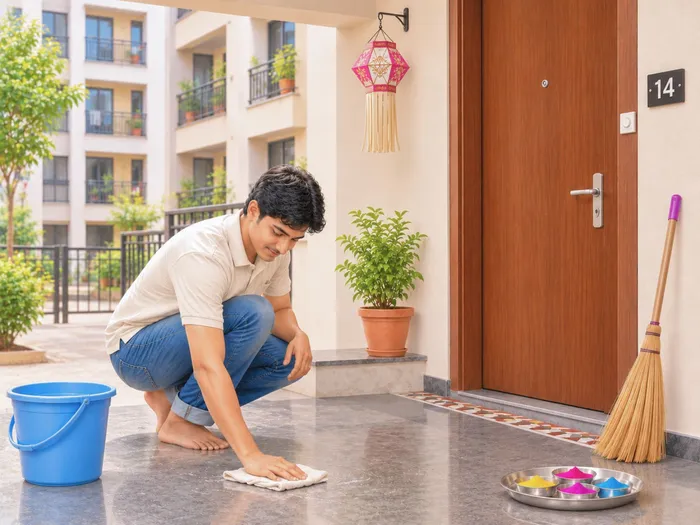
During Diwali, we take special care of our entrance. We clean the doorstep, put up decorations and make a rangoli. We want the entrance to look welcoming. Now think about the entrance to your mind.
Throughout the day, different thoughts come to us. Some are useful and positive. Others are filled with worry, comparison, criticism or doubt. For example, you see someone else's Diwali celebrations on social media and immediately think, "Their home looks so much better than mine." Or a family member doesn't help with the preparations, and the thought comes, "Nobody ever helps me with anything." Perhaps someone hasn't called to wish you, and you start wondering why.
A small situation happens outside, but we create several thoughts about it inside.
And sometimes, those thoughts stay with us much longer than the situation itself. We cannot always prevent a thought from entering our mind, but we can choose whether to continue thinking about it. Every thought we repeatedly create influences our feelings, words and actions. Over time, these thoughts also shape our habits and sanskars.
So, just as we pay attention to what we place at our doorstep, can’t we become more mindful of the thoughts we give space to?
A Little Thought Experiment
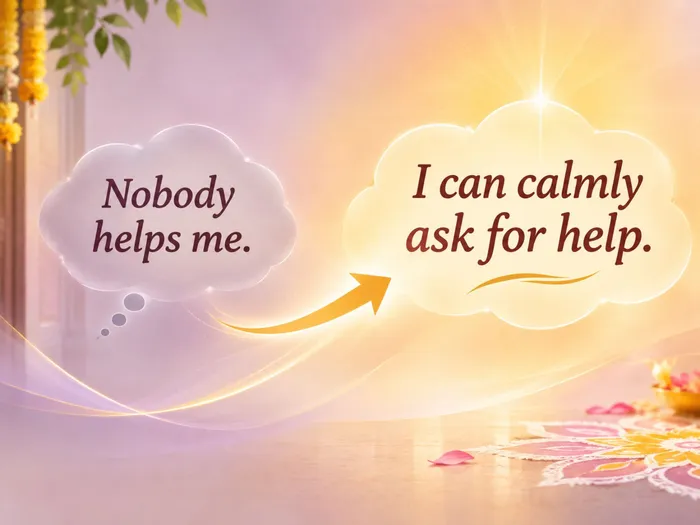
The next time you notice an unnecessary thought, try changing it before it becomes a long conversation in your mind. For example: Instead of "Nobody helps me.", try: "I can calmly ask for the help I need." Instead of: "Why didn't they call me?", try: "I can take the first step and wish them." Even one changed thought can change the way we feel and respond.
Your Diwali practice : When you see a rangoli today, remember to create one welcoming thought in your mind. Let it be a thought of peace, respect or good wishes for someone. Just as a rangoli makes the entrance welcoming, our thoughts can make our inner world a more peaceful place.

The Forgotten Room: Is There Still a Corner Left to Clean?
A Corner Left to Clean
Now while listening to this next audio, let's open that cupboard we've been avoiding. We may have cleaned the living room, kitchen and bedrooms. Everything looks ready for Diwali. But then we remember that one cupboard. The one where we have been putting things for months, thinking,
"I'll sort it out later."
When we finally open it, we find old things we no longer use and items we had completely forgotten about.
We may be doing well in everyday life, but somewhere inside, we are still holding on to an old incident, an expectation or a habit that has become part of our nature. And sometimes, we don't even want to let go of these habits because we believe we need them. For example, we may think, "If I don't get angry, nobody will listen to me." Or, "If I stop worrying, I might become careless."
We may have become so used to reacting in a certain way that we no longer question whether there is a better way. But can we be firm without being angry? Can we be responsible without constantly worrying?
This is where inner cleaning becomes more meaningful. it is not only about forgetting past incidents or removing negative thoughts. It is also about recognising the old sanskars we continue to carry, sometimes without realising it and cleaning them. Just as we clean every corner of our home during Diwali, we can give attention to even those small habits that we usually overlook.

One Corner to Clean
As you clean or organise something today, think of one habit you have been holding on to because you believe it is necessary. Ask yourself: Can I handle the same situation with a different quality? Perhaps you can replace irritation with patience, worry with trust, or the need to control everything with understanding. Choose one quality and make a conscious effort to practise it when the opportunity comes.
Your Diwali practice : While clearing an old cupboard or shelf, choose one old sanskar that you would like to transform. Let the physical cleaning remind you of the inner change you are working towards.

The Account Room: What Will We Carry Into the New Year?
Let's open a new account
Now listen to this festive audio.
For many families and businesses, Diwali is also associated with closing old accounts and beginning new ones. Old records are checked, payments are reviewed, and preparations are made for a fresh financial year. While listening to the audio above, let us explore how can we give the same attention to our inner accounts—the thoughts we create, the words we speak and the actions we take. Every interaction adds something to these accounts. When we speak with patience or help someone without expecting anything in return, we create a positive account. When we repeatedly criticise, become angry or hurt someone through our behaviour, we create accounts that affect our relationships and our own peace of mind.
Interestingly, we often remember what others have said or done to us, but rarely give the same attention to our own thoughts, words and actions. Instead of checking our own accounts, we sometimes find ourselves keeping a record of others' mistakes. But what if we used these moments to check ourselves instead? Rather than focusing on what someone else should have done differently, we can pause and ask, "Could I have responded with a little more patience, understanding or respect?"
Perhaps when similar situations arise, our old sanskars often lead us to react in the same familiar ways. But each time we make that conscious choice, we take a small step towards changing an old sanskar and creating a better account.
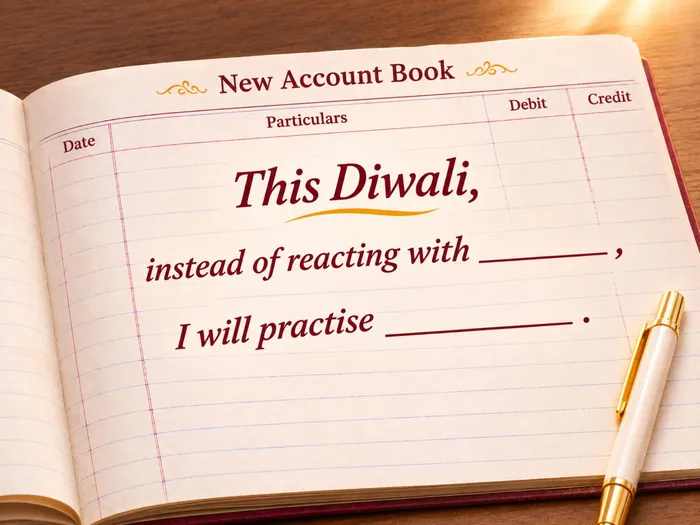
Make One New Entry
Imagine opening a fresh page in your spiritual account book. You don't need to review every mistake or make a long list of resolutions. Just complete this one sentence:
"This Diwali, instead of reacting with ________, I will practise ________."
For example: Instead of expecting appreciation, I will practise doing things with love. Now, when the situation arises, try putting your new resolution into action.
Your Diwali practice : During one conversation today, pause before responding and ask yourself, What kind of account am I creating through my words right now? We may not be able to change every entry from the past, but we can take responsibility for the accounts we create from this moment onwards.
The Room of Light: Have We Lit the Diya Within?
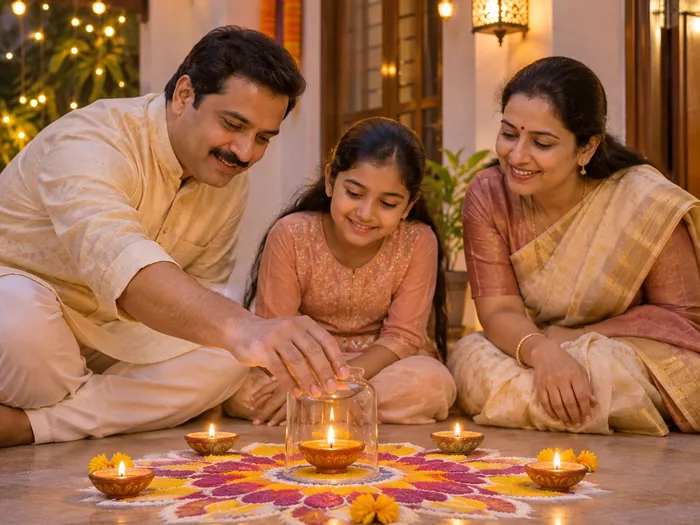
Time to Light the Diyas!
The cleaning is done. Now it's time to light the diyas. So let us play this festive audio.
After all the preparations, one of the most special moments of Diwali is lighting the diyas. A small flame begins to glow, and soon there are rows of lights around the home. We take care to place the diyas properly and keep them burning. But while lighting these lamps, have we remembered the living light within us?
In spiritual understanding, we are souls: tiny points of conscious, living light. The soul is the one that thinks, feels, decides and acts through the body. Peace, love, purity and happiness are our original qualities. But as we go through everyday life, we often become so involved in our roles and responsibilities that we forget this simple truth.
We remember that we are parents, children, professionals, friends or family members. We remember what we have to do, where we need to go, and what others expect from us. But how often do we pause and remember: I am a soul?
Remembering our true identity once is not enough. We need to practise this awareness while working, speaking and interacting with others. Through Rajyoga meditation, we become aware of ourselves as souls and connect our thoughts with the Supreme Soul, the Ocean of Peace and Love. This connection gives us the strength to remain peaceful and stable even when situations around us change.

Lighting the Light Within
Just as we light the diyas in our homes, let us also awaken the light within ourselves. Through this meditation, we connect with our true identity as souls and experience the Supreme Soul’s love, strength and protection. Take a few moments to listen and reflect on your own inner journey, experience that divine light and share its peaceful vibrations with our loved ones and the world.
Experience NowYour Diwali practice : Whenever you light or notice a diya today, pause for a few seconds. Remember yourself as a soul and connect with the Supreme Soul. Then continue whatever you are doing with that awareness. The diyas around our home may burn for a few hours. But the awareness of being a peaceful soul is something we can continue to keep alive every day.
The Balcony: What Light Are We Sharing With Others?
Finally, let's place the diyas outside
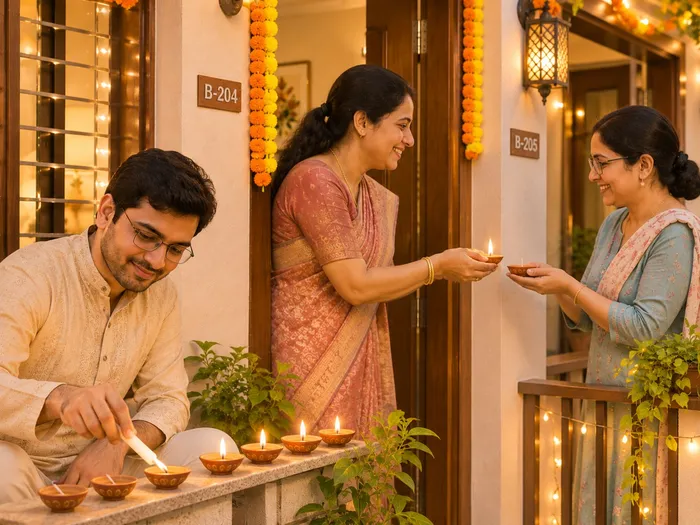
As the audio music become more festive and Diwali evening approaches, we place diyas on our balconies, windows and doorsteps. A single diya looks beautiful. But when many diyas are lit together, they form a Deepmala, a row of lights.
When we look at a row of diyas, we see many lights glowing together. But what happens when we bring that idea into our relationships? Can we remain respectful even when we disagree? Can we offer support without waiting for something in return? Can we remain steady when someone else's mood changes? Deepmala reminds us not only of our own light, but of the kind of relationships we can create when we live with these qualities. Additionally, just as one lamp can help light another, a peaceful and loving soul can inspire others through their thoughts, words and behaviour.
During Diwali, we exchange sweets and gifts with family, friends and neighbours. But these are some gifts that are not bought or wrapped - the gift of patience, the gift of forgiveness, the gift of listening without interrupting. Sharing light does not always require doing something big. Often, it begins with the way we think about someone.
When we see others as souls, beyond their roles, behaviour and mistakes, it becomes easier to develop good wishes for them.
And when we are connected with the Supreme Source of peace and love, we have more inner strength to share these qualities without expecting something in return.
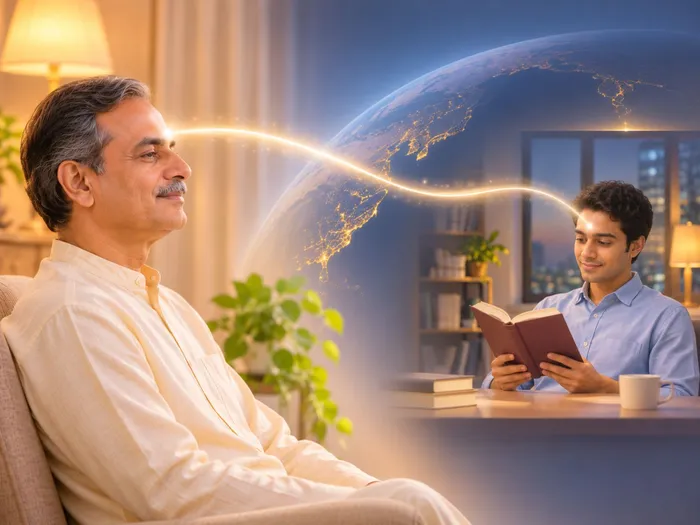
Give an Invisible Gift
Bring one person into your thoughts. It could be a family member, a friend, a colleague, or someone with whom your relationship has become a little distant. For a moment, put aside what they have said or done. See them as a soul, just like you. Quietly create these thoughts: You are a peaceful soul. May you experience happiness and strength. May your mind remain peaceful. May you find the support you need.
Your Diwali practice : Along with the sweets and gifts you share today, give at least one person an invisible gift: peace, respect, encouragement or good wishes. When one soul shares peace and love with another, the celebration of light goes beyond the diyas.
What Happens After Diwali?
A few days after Diwali, the decorations come down, the guests leave, and life returns to its usual routine. And somewhere in that routine, the same situations return. Someone speaks to us rudely. Things don't go as planned. A family member repeats a mistake that has irritated us many times before.
We know we should remain calm. We know that reacting angrily will not help. Yet, before we realise it, we respond in exactly the same way. And sometimes, we simply accept it by saying,
"That's just how I am."
But is that really who we are, or is it a habit we have practised for so long that it now feels natural? This is where the deeper meaning of Diwali becomes important. Closing an old account is not just about forgetting what happened in the past. It is also about recognising the old thoughts, reactions and sanskars that we continue to carry into the present. And opening a new account means choosing not to keep repeating them.
So, this Diwali, instead of making several resolutions, choose just one old reaction that you have wanted to change the most. Perhaps you get irritated when someone doesn't listen to you. Or you immediately defend yourself when someone points out a mistake.
The next time it happens, try something different. Perhaps when you pause for just a few seconds, remember, I am a peaceful soul. I can choose how I respond. Take strength through remembrance of the Supreme Soul, and then say or do what the situation requires, without being controlled by your old reaction. You may not succeed every time. But every time you recognise the old habit and consciously choose a different response, you are making an effort to create a new sanskar. And here's a simple way to check your progress.
At the end of the day, take a moment to ask yourself: Did someone experience more patience, understanding or respect from me today than they normally would?
Perhaps the change was small. You listened instead of interrupting. You explained something calmly instead of getting irritated. Or you chose not to continue an unnecessary argument. These are the moments when spiritual understanding begins to become part of our nature.
Because the real celebration of our inner Diwali may not be what we experience during the festival, but what happens when life presents us with the same old situation again.