















Change One Wrong Thought to Live Life Your Way
Discover how altering just one erroneous belief can significantly transform your life and the lives of those around you. Embrace the journey of introspective change and live life on your terms.
In today’s world, digital gadgets like smartphones, tablets, and laptops have become an integral part of our lives. While these devices offer numerous benefits, their excessive use can have a profound impact on various aspects of our life, including our emotional well-being, health, family, and friendships. Understanding these impacts is crucial for maintaining a balanced life and ensuring that technology enhances rather than detracts from our overall well-being.
In the vibrant town of Anandpur, lived a young man named Arjun. Arjun was known for his sharp mind and tech-savvy nature. His friends admired his ability to navigate through the latest gadgets, and he was often the go-to person for tech-related queries. However, as time passed, Arjun’s fondness for digital devices began to overshadow other aspects of his life.
Arjun’s day would start with the alarm on his smartphone. Instead of greeting the morning with a smile and gratitude, his first instinct was to check messages and emails. As he scrolled through social media, time would slip away, making him rush through his morning routine.
Breakfast with his family became a silent affair, with everyone glued to their screens, missing the warmth of morning conversations.
At work, Arjun was highly efficient, thanks to his digital skills.
However, the constant ping of notifications made it hard for him to focus. His productivity suffered as he constantly shifted his attention from one app to another. The quality of his work deteriorated, and he found himself increasingly stressed.
One day, a new neighbor named Ravi moved in next door. Ravi was quite different from Arjun; he valued simplicity and was known for his minimalistic lifestyle. He rarely used his phone and preferred spending time outdoors, connecting with nature. Curious about Ravi’s lifestyle, Arjun decided to invite him over for tea.
As they chatted, Arjun learned about Ravi’s approach to life. Ravi spoke about the joys of being present in the moment, the peace that comes from disconnecting from digital devices, and the deep connections one can form with family and friends when distractions are minimized. Intrigued but skeptical, Arjun decided to give Ravi’s suggestions a try.
The next morning, Arjun left his phone behind and went for a walk in the park. He noticed the chirping of birds, the rustling of leaves, and the fresh morning air – things he had long ignored. Feeling refreshed, he returned home to find his family having breakfast. This time, he joined them without his phone, engaging in meaningful conversation. The change was subtle but significant.
Encouraged by the positive experience, Arjun decided to set boundaries for his digital usage. He designated specific times for checking emails and social media, ensuring it didn’t interfere with his personal life. At work, he implemented techniques to stay focused, like the Pomodoro Technique, which helped him manage his time and reduce stress.
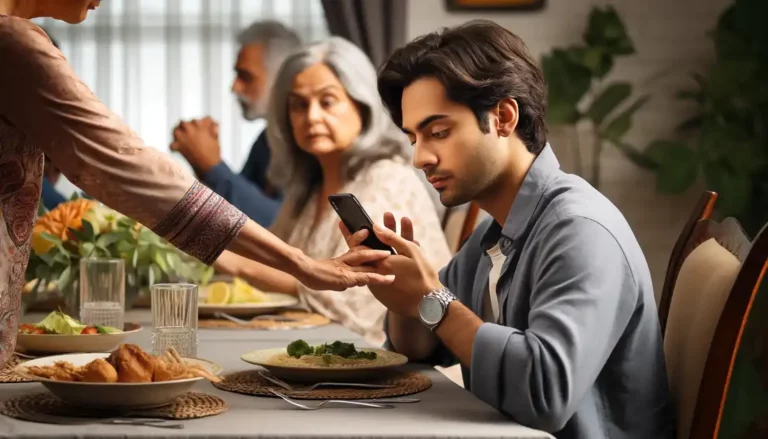
Despite these efforts, Arjun found it challenging to disconnect completely. One evening, while having dinner with his family, a work-related email popped up on his phone. Instinctively, he reached for it, but his mother gently placed her hand on his. “Arjun, this time with family is precious. Work can wait.”
Her words resonated deeply. Arjun realized that his excessive gadget use was not only affecting his work but also straining his relationships with his loved ones. Determined to make a change, he adopted a more disciplined approach.
Meanwhile, Ravi noticed a significant improvement in Arjun’s demeanor. They began spending more time together, exploring the town, and engaging in activities that didn’t involve screens. Arjun rediscovered the joy of human interaction and the simple pleasures of life.
One day, Arjun received an urgent call from his office. A critical project was in jeopardy, and his presence was required immediately. Torn between his commitment to disconnect and his professional responsibilities, Arjun turned to Ravi for advice. Ravi suggested finding a balance, emphasizing the importance of fulfilling professional duties while maintaining personal well-being.
Arjun went to the office and addressed the crisis. However, he made it clear to his colleagues that they needed to establish better communication protocols to avoid such emergencies in the future. His assertiveness and clarity impressed his superiors, and they agreed to his suggestions.
Back home, Arjun felt a sense of accomplishment. He had managed to handle the crisis without compromising his personal values. His relationship with his family improved as he became more present and engaged.
He also reconnected with his old friends, who were delighted to have the old Arjun back.
One evening, as the family gathered for dinner, Arjun looked around the table. The gadgets were put away, and the room was filled with laughter and lively conversation. He felt a deep sense of gratitude for the lesson he had learned.
However, life had one more lesson in store for Arjun. One day, while playing cricket with Ravi, he slipped and injured his leg. The injury required him to stay off his feet for several weeks. Initially, Arjun felt frustrated and bored. But Ravi suggested using this time for introspection and personal growth.
Arjun began reading books he had long neglected, meditated regularly, and even tried his hand at sketching.
He discovered new passions and interests that didn’t rely on digital devices. The injury, which he had initially seen as a setback, turned into an opportunity for personal growth and self-discovery.
Arjun’s journey is a testament to the importance of balancing digital life with real life. The key takeaway is that while technology is a valuable tool, it should not dominate our existence. By setting boundaries and prioritizing human connections, we can lead a more fulfilling and balanced life.
Emotional Impact: Excessive gadget use can lead to feelings of anxiety, depression, and isolation. Prioritizing face-to-face interactions fosters emotional well-being and stronger relationships.
Health Concerns: Prolonged screen time can cause physical health issues like eye strain, poor posture, and sleep disturbances. Incorporating regular breaks and physical activity is crucial for maintaining good health.
Family and Friends: Relationships with family and friends can suffer due to constant digital distractions. Setting boundaries and making time for loved ones enhances the quality of these relationships.
Work-Life Balance: Managing digital usage during work hours improves focus and productivity, reducing stress and improving overall performance.
I am grateful for the technology that enhances my life, but I choose to balance its use, prioritizing my health, emotional well-being, and relationships. I cherish the moments spent with my loved ones and strive to lead a balanced and fulfilling life.

Discover how altering just one erroneous belief can significantly transform your life and the lives of those around you. Embrace the journey of introspective change and live life on your terms.

Discover the transformative power of reconfiguring your responses to life’s minor disturbances for a stronger, more resilient mind.

Discover simple practices to make positivity a natural part of your life. Learn about the power of discernment and how managing your thoughts can lead to lasting happiness

Is success only about money and material gains? This blog dives deeper, suggesting true success comes from inner happiness and fulfillment, and the impact we make on others. Achievements are great, but lasting contentment starts

Discover the transformative power of viewing detox not just as a physical cleanse but as a holistic approach to living, emphasizing the profound connection between mind, body, and environment.

To shift from negative to positive thinking, we must first change our emotional diet. This change begins with mindfulness about what we consume through media, social interactions, and personal hobbies. A one-week experiment of consciously