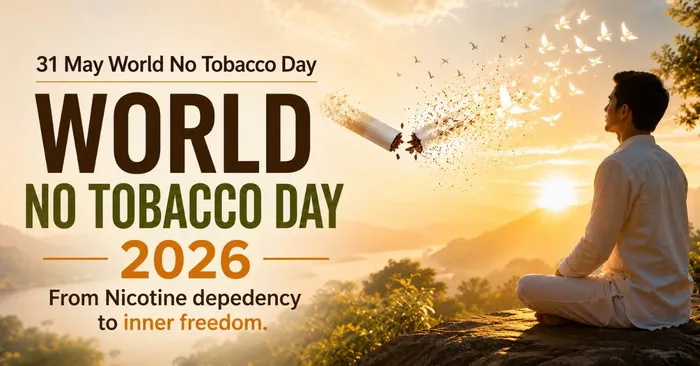
Every year on May 31st, the global community comes together to address one of the greatest public health challenges of modern times. For World No Tobacco Day 2026, the WHO1 has chosen the theme: “Unmasking the Appeal – Countering Nicotine and Tobacco Addiction.”
This year’s campaign highlights how the tobacco and nicotine industry increasingly presents addictive products in modern, socially appealing forms — especially targeting younger population. From aggressive digital marketing and influencer culture to products such as e-cigarettes, flavoured nicotine pouches, synthetic nicotine, and chemical analogues, addiction now comes packaged as lifestyle and innovation.
While governments and health systems continue to strengthen the regulations and awareness campaigns, an equally important question remains:
How do individuals become internally strong enough to permanently overcome addiction?
From the perspective of the Brahma Kumaris, freedom from tobacco is not achieved merely through suppression, fear, or temporary abstinence. Real transformation happens when an individual adopts a spiritually elevated and emotionally empowered way of life — a true Rajyogi lifestyle.
The Grim Reality: Global Tobacco Statistics 2026
The scale of nicotine dependency continues to be alarming:
- Tobacco use kills more than 7 million people globally every year
- A significant number of these deaths occur due to direct tobacco consumption
- Around 1.3 million non-smokers die annually because of exposure to second-hand smoke
- Approximately 37 million adolescents aged 13–15 use tobacco products globally
- In several urban regions, adolescent vaping rates have surpassed adult cigarette smoking
- Nearly 80% of tobacco users live in low and middle-income countries, where the health and economic impact is often more severe
Beyond disease and mortality, tobacco addiction affects families, relationships, finances, and overall quality of life.
Why Nicotine Hijacks the Mind: The Emotional Dimension of Addiction
From a spiritual point of view, addiction is not only a physical or chemical issue. It is also deeply connected to our emotional and mental state.
Many individuals turn toward nicotine not just because of cravings but because they are dealing with stress, anxiety, loneliness, emotional exhaustion, peer pressure, or a lack of inner stability. Nicotine may provide temporary relief, but over time it weakens emotional resilience and creates dependency.
As reflected in the spiritual wisdom shared by the Brahma Kumaris, “If giving up a small habit feels difficult, overcoming a major addiction becomes even harder without building inner strength.”
Many smokers sincerely want to quit. They understand the health risks and the long-term consequences. Yet they often find themselves returning to the habit because the underlying emotional void driving the addiction has not been addressed.
Here, the Rajyogi approach therefore shifts the focus:
Rather than fighting addiction alone, strengthen the inner self so deeply that such dependencies and habits begin to lose their hold naturally.
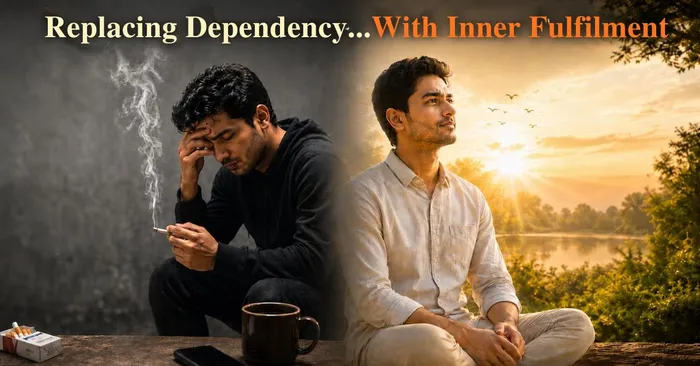
The Rajyogi Lifestyle: Replacing Dependency With Inner Fulfilment
Trying to force a person to give up addiction through fear, guilt or pressure rarely addresses the root cause. There is a simple example often used to explain this.
If a child is tightly holding a stone and someone forcibly takes it away, the child becomes upset. But if you place a chocolate in the child's other hand, the stone is dropped willingly.
Similarly, instead of simply telling people to stop smoking, a spiritually empowered way of life helps them discover something far more valuable — inner peace, self-respect, emotional stability, and spiritual fulfilment. As these qualities deepen, the attraction toward addictive substances gradually diminishes on its own.
In the Brahma Kumaris understanding, Rajyoga is much more than a meditation technique. It is a practical lifestyle — where thoughts, food, actions, relationships, and daily choices become more elevated and pure.
The Seven Steps for Freedom From Addiction







The Seven Steps for Freedom From Addiction
The Rajyogi lifestyle goes beyond sitting in meditation for a few minutes each day. It is a holistic approach that gradually transforms our thoughts, emotions, habits, relationships, and daily routines.
Here are seven interconnected steps:
Step 1 : Early Morning Meditation
Waking up early, especially during the early amritvela2 hours, and connecting with the Supreme Source of Peace helps recharge the mind with spiritual strength, clarity, and self-control.
Step 2 : Satvik Diet
A pure vegetarian diet prepared and consumed in a peaceful state of mind positively influences emotional balance and mental stability. Purity in food gradually supports purity in thoughts and behaviour.
Step 3 : Daily Spiritual Study
Daily spiritual knowledge nourishes the intellect with elevated thoughts and and helps transform old habits, negative patterns, and limiting beliefs.
Step 4 : Traffic Control of the Mind Through the Day
Taking short pauses throughout the day to check and redirect thoughts helps prevent the mind from running on autopilot and, avoiding impulsive emotional reactions and addictive tendencies.
Step 5 : Practice of Soul Consciousness
Regularly reminding yourself, “I am a peaceful and powerful soul, master of my mind,” gradually builds self-respect and reduces dependency.
Step 6 : Staying connected with the Supreme through the day
Maintaining a connection with the Supreme while carrying out daily responsibilities creates emotional stability and a sense of inner companionship, reducing feelings of loneliness and emptiness.
Step 7 : Meditation Before Sleep
Ending the day with peaceful reflection and remembrance before sleeping helps cleanse emotional burdens accumulated during the day and improves subconscious stability, reducing stress-triggered cravings.

Before You Sleep : A Spiritual Unplug
Let us end our day with peace. Through this meditation commentary, let us release the scenes of the day, practise soul consciousness, and create calm thoughts for restful sleep and a fresh, positive morning.
Experience NowBuild a Meditative Lifestyle, Beyond Meditation
Meditation is often practiced as a technique for relaxation, stress management, or improving mental well-being. While these benefits are valuable, let us now understand the Rajyogi lifestyle more deeply.
Real transformation comes from living a spiritual lifestyle — bringing awareness into everyday activities of life through:
- Elevated thoughts
- Disciplined emotions
- Satvik food
- Peaceful relationships
- Remembrance of the Supreme
When these become part of daily living, the mind gradually becomes stronger and cravings begin to lose their intensity.
Understanding the Impact : Lifestyle Transformation and Addiction Recovery
Research is increasingly showing that spiritual practices and lifestyle changes can play an important role in overcoming addiction.
One study conducted across 25 states and Union Territories in India involved 1,021 tobacco users who consumed different forms of nicotine. The findings showed that a significant number of participants were able to quit tobacco successfully within one month after attending regular Rajyoga-based lifestyle education programs.
The study also suggested that participants experienced lasting improvements and lower relapse rates because the change came from within rather than being imposed externally.
Another thematic analysis published in the International Journal of Advance Research in Multidisciplinary found that the Rajyogi lifestyle supports emotional self-regulation, strengthens psychological resilience, and helps individuals replace inner restlessness with a sense of self-worth and spiritual fulfilment.
These findings reinforce an important idea: when inner strength, spiritual awareness, and healthy lifestyle habits come together, recovery becomes more sustainable.
Beyond Tobacco: Understanding Modern Addictions
Tobacco addiction is one of the visible form of dependency in modern society. Today, people also struggle with:
- Digital addiction
- Excessive screen exposure
- Emotional dependency
- Anger
- Overstimulation
- Compulsive social media use
- Unhealthy coping habits
The Rajyogi lifestyle addresses the deeper psychological vacuum behind all forms of dependency by restoring inner peace, self-control, and emotional contentment.
When a person feels fulfilled from within, the need for constant external stimulation naturally decreases.
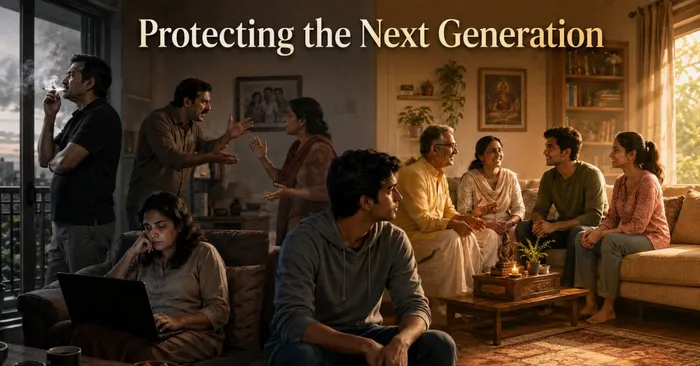
Protecting the Next Generation
The theme of World No Tobacco Day 2026 emphasizes protecting children and youth from manipulative marketing and addictive trends.
Children learn far more from what they observe than from what they are told. If adults regularly cope with stress through smoking, anger, excessive screen use, or emotional instability, children often absorb those patterns without realizing it.
Therefore, anti-addiction campaigns must begin not only in institutions and policies, but also within families.
When families cultivate, peaceful communication, emotional acceptance, spiritual values, disciplined media habits, and meditative living, children grow with emotional security and greater resistance to peer pressure and harmful influences.
Your Practical Commitment for World No Tobacco Day
This World No Tobacco Day, try a 24-hour experiment in conscious living.
Establish a No-Anger Zone
Avoid anger, harsh words, and negative gossip for one full day. Emotional calmness reduces the subconscious urge to seek nicotine for temporary relief.
Audit Your Mental Content Diet
Reduce exposure to violent, toxic, or overstimulating content. Replace at least 15 minutes of screen time with spiritual reading, reflection, or meditation.
Practice Soul Consciousness
Take a few moments during the day to remind yourself:
“I am a peaceful soul. Peace and purity are my original nature.”
End the Day with Peaceful Reflection
Before sleeping, disconnect from screens for a few minutes and sit in silent remembrance of the Supreme. Allow the mind to enter rest with gratitude and calmness.
Towards a Tobacco-Free and Spiritually Empowered Society
World No Tobacco Day should be more than a campaign against cigarettes and nicotine. While awareness, regulations, and public health initiatives are essential, lasting freedom from addiction ultimately depends on strengthening the individual from within.
This is where the Rajyogi lifestyle offers a deeper solution. By practicing soul consciousness, maintaining purity in thoughts and actions, cultivating elevated thinking, and staying connected with the Supreme, individuals gradually build emotional resilience, self-respect, and inner stability. As this inner strength grows, the attraction toward addictive substances naturally begins to diminish.
In this way, freedom from tobacco becomes part of a larger journey of personal transformation. True freedom is not achieved by merely suppressing desires; it comes from experiencing a deeper sense of fulfilment, peace, and contentment within.
Let us therefore look beyond the illusion of temporary stimulation and rediscover the lasting power of inner peace. By creating spiritually empowered individuals, we can move closer to building a healthier, more conscious, and tobacco-free society.
Wishing the global family a healthy, conscious, tobacco-free, and spiritually empowered World No Tobacco Day 2026.
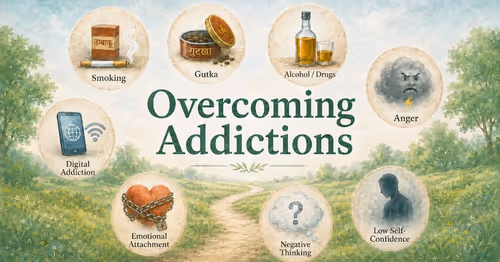
Overcoming Addiction — From Habits to Self-Mastery
Explore this 12-audio series to understand how addictions and habits become compulsions and how awareness, Rajyoga meditation, inner strength, and connection with God can guide the journey from addiction to self-mastery.
Listen NowWHO - World Health Organization
Amritvela - Time which is also called as Brahma Murt