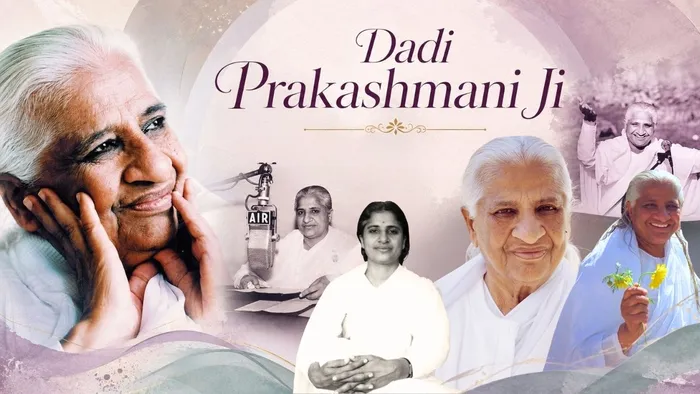
From the early days of the Yagya to the worldwide expansion of the Brahma Kumaris, Dadi Prakashmani Ji played a remarkable role in nurturing people, strengthening service and helping thousands move forward on their spiritual journey.
Yet her journey becomes even more meaningful when we ask: How did a fourteen-year-old girl gradually become capable of carrying the responsibility of an expanding worldwide spiritual family?
The answer lies not only in the major milestones of her life, but in the experiences that quietly shaped her along the way—the responsibilities she accepted while still young, the years of tapasya and training under Brahma Baba and Mamma (Mateshwari Jagadamba Saraswati), the way she learnt to understand and nurture people, the trust she placed in others, and the simplicity she maintained even as the field of service continued to grow.
To understand the Dadi Prakashmani Ji whom thousands later knew as a spiritual mother and leader, we first have to meet her as Rama—a young girl with deep devotion, a simple heart, and an intense longing to experience the Divine—where her journey truly begins.
Part One: Rama — Before the World Knew Dadi Prakashmani
Dadi Prakashmani ji was born in 1922 in Hyderabad, Sindh of undivided India. Her childhood name was Rama.
Long before leadership, administration or world service became part of her life, there was devotion. From the age of seven or eight, Rama rarely let a day pass without remembering and worshipping Shri Krishna. A Radha-Krishna temple stood near her home, and she visited it every morning and evening. At night, she would lovingly swing Krishna’s image in a jhula before gently putting the idol to rest. Spiritual books and religious stories were also a natural part of her childhood.
Her father was a businessman and astrologer with a deep interest in spirituality, so religion and spiritual life were familiar subjects at home. In this environment, the young Rama developed a simple but heartfelt wish: She wanted to become like Meera.
The usual pleasures of childhood did not seem to interest her very much. She later recalled that she rarely asked for special clothes, particular foods or outings. Yet beneath this quiet contentment was one longing that stayed with her:
When would I actually see Shri Krishna?
Then, during the Diwali holidays of 1936, when Rama was about fourteen, that longing took an unexpected turn.
The Diwali She Later Called Her Spiritual Birth
One morning during those Diwali holidays, while Rama was still in bed, she had an unusual experience.
She saw a vast garden filled with light. In the distance was a small form of Shri Krishna, carrying a flute and coming towards her. Behind him stood a figure dressed in white. The vision filled her with happiness.
Rama told no one about it. She had heard that a divine vision should be kept quietly within. But inwardly, a longing had begun: she wanted to experience it again. She sat with her rosary and remembered Shri Krishna. She went to the temple as usual. She waited.
But the vision did not return.
A few days later, Rama visited her classmate Leela and found her sitting in an unusually deep state of meditation. When Leela came out of that state, she told Rama that she could take her somewhere she might experience Shri Krishna. Rama laughed. How could anyone simply take another person to see Krishna?
Still, the thought stayed with her. The following day, with her father’s permission, she went to the spiritual gathering Leela had spoken about. Dada Lekhraj—who would later be known as Brahma Baba—was conducting the gathering. The sound of Om filled the room. As Rama looked towards his forehead, she saw light.
And then, almost immediately, the garden returned. Shri Krishna returned. The white-clad figure returned.
The experience she had been waiting for was suddenly before her again.
Rama became so absorbed in meditation that she did not even realise when the gathering had ended. In the days that followed, she would repeatedly enter that same deep inner state. Something had shifted within the fourteen-year-old Rama. The devotion that had begun in childhood as a longing to see Shri Krishna had now opened the door to a very different spiritual journey.
Years later, looking back on those days around Diwali, Dadi Prakashmani would describe them as her alaukik janm— her spiritual birth.
At Fourteen, the Student Was Already Becoming a Teacher
The experience of those Diwali days did more than fulfil Rama’s childhood longing. It quietly changed the direction of her life. At around fourteen, she chose to dedicate herself to spiritual study and Godly service.
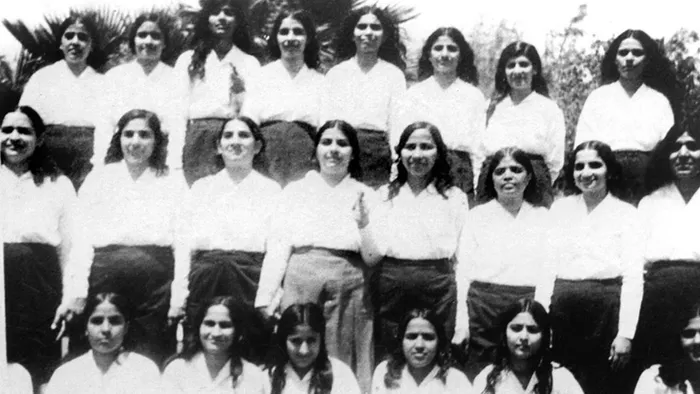
What followed were the foundational years of Om Mandali (now known as the Brahma Kumaris). They were years of collective living, spiritual study, meditation, discipline and tapasya—years in which Rama herself was still learning and growing.
Yet, remarkably, she was already being entrusted with the growth of others.
In 1937, a boarding school was formally opened for children connected with the spiritual community. Around fifty young children lived and studied there. Rama was only about fourteen herself, yet she was given the responsibility of teaching children not much younger than she was. She would later remember the simplicity of those early days. There were no professional degrees or formal qualifications. A responsibility had been given, and they simply learnt to fulfil it.
Perhaps this was where one of the strongest threads of Dadi’s life first began to take shape.
More than three decades before she would become the Administrative Head of the Brahma Kumaris, Rama was already learning something more fundamental than administration: how to take responsibility for another person’s growth.
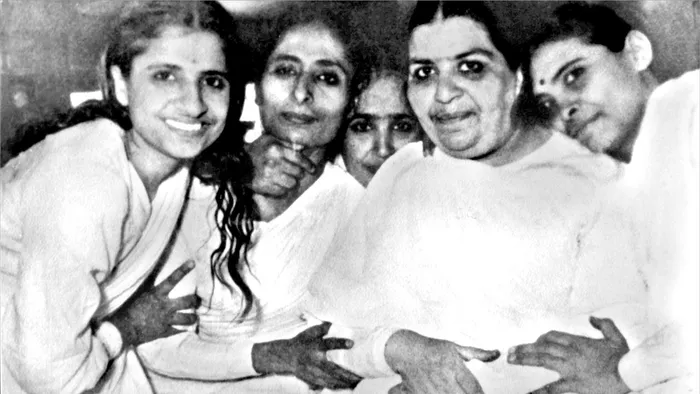
From Rama to Kumarka to Prakashmani
As Dadi ji’s spiritual life deepened, the names by which she was known also began to change.
Brahma Baba lovingly called her “Kumarka.” The name reflected the softness, purity and innocence he saw in the young kumari. Then came the name by which the world eventually knows her: Prakashmani—“Jewel of Light.” The name was given during the early years of the organisation through the spiritual naming by Incorporeal God Shiva. Gradually, Rama became Prakashmani—not merely in name, but through her tapasya and service.
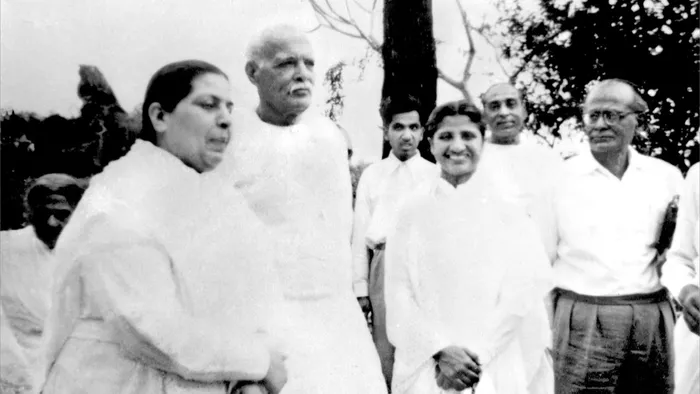
During these formative years, she closely observed Brahma Baba and Mamma (Jagadamba Saraswati). From them, she absorbed a quality that would remain visible throughout her life: the ability to be deeply caring towards people while remaining clear and unwavering in principles.
Even while she was still young, those around her began affectionately calling her “Munni Mamma.” She was not a mother in the worldly sense. Yet people experienced something distinctly motherly in the way she cared for them.
Part Two: From Tapasya to Seva
The early years had prepared Prakashmani inwardly. Now, that inner preparation began to find expression in seva. And her service did not begin with large audiences, titles or platforms. It began in much simpler ways.
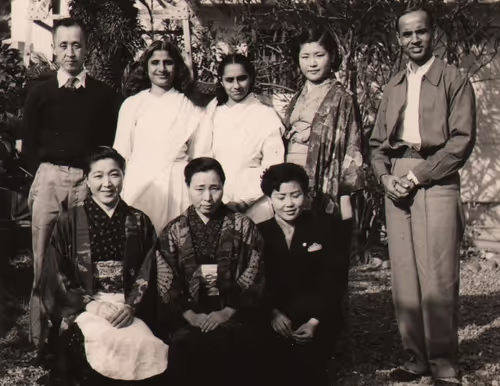
Japan Service with Dadi Ratanmohini ji
One of Dadi Prakashmani’s earliest international journeys came in 1954, when she travelled with Dadi Ratanmohini to Japan for an international religious conference. Throughout their stay, Dadi Prakashmani and Dadi Ratanmohini met people and shared the story and spiritual understanding of the organization. It was a simple beginning to international service, but one that reflected something Dadi would carry throughout her life: seva was never defined by the size of the stage.
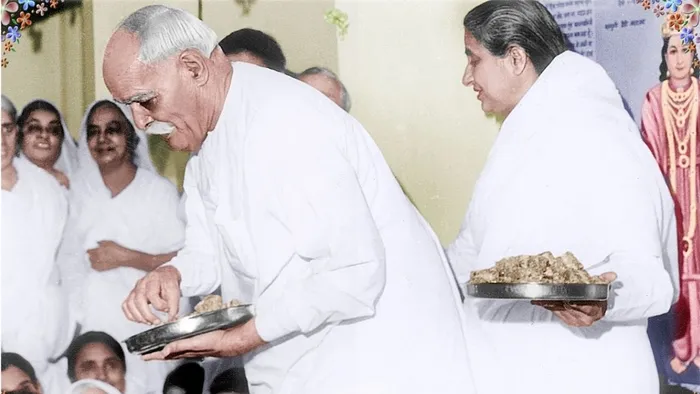
Mumbai: Where Service Became Training
Apart from the International seva, Dadi also served in different places then in India, including Patna, but Mumbai became an especially important chapter in her journey.
At the time, the boundaries of service were fluid. A person giving a lecture might also prepare food. Someone guiding a centre might also sit down to correct the wording on an exhibition panel. A senior sister might personally receive and care for a visitor.
Dadi learnt nearly every dimension of seva in this way—not from a distance, but by doing it herself.
One incident from 1964 shows how much trust Brahma Baba had already begun placing in Kumarka. At the time, a new form of public service was taking shape through spiritual exhibitions. The first picture, titled “Sachcha Vaishnav Kaun?”, was sent to Brahma Baba for approval.
When it returned, the wording had been corrected and rewritten. Ramesh Bhai noticed something immediately: the handwriting was not Brahma Baba’s. Curious, he wrote back asking who had made the corrections. Baba’s reply was simple:
Kumarka was with him, and she had corrected the text.
Dadi subsequently became involved in finalising the explanations that accompanied the exhibition pictures. This was not merely a matter of editing words. The challenge was to take spiritual knowledge and express it in a form that people encountering it for the first time could understand. The fourteen-year-old Rama who had once been entrusted with teaching children without a formal qualification was now helping shape how spiritual knowledge would be presented to the wider public.
Under Mamma’s Wing
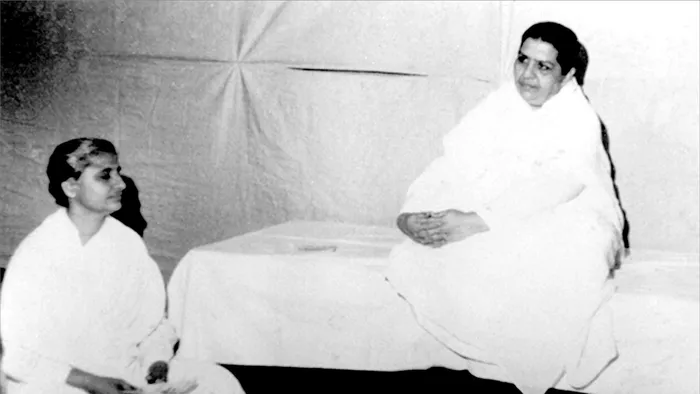
As Dadi learnt the many practical dimensions of seva, she was also being shaped by someone she observed closely: Mateshwari Jagadamba Saraswati—Mamma, the first Administrative Head of the Brahma Kumaris.
Until 1965, Dadi Prakashmani continued to receive Mamma’s guidance by simply watching how Mamma lived and cared for the organization. There was Mamma’s accuracy and discipline. Her ability to sustain people with love while remaining firm in principles. And perhaps most importantly, the way spiritual authority and motherhood seemed to exist so naturally together in her.
These qualities found an echo in Dadi Prakashmani.
Dadi was learning that to sustain a spiritual family required both strength and softness—the firmness to uphold what was right, and the heart to make each person feel cared for.
Part Three: When Responsibility Became Real
The years of tapasya, teaching and service had prepared Dadi Prakashmani in ways that perhaps only became fully visible when the moment of responsibility arrived.
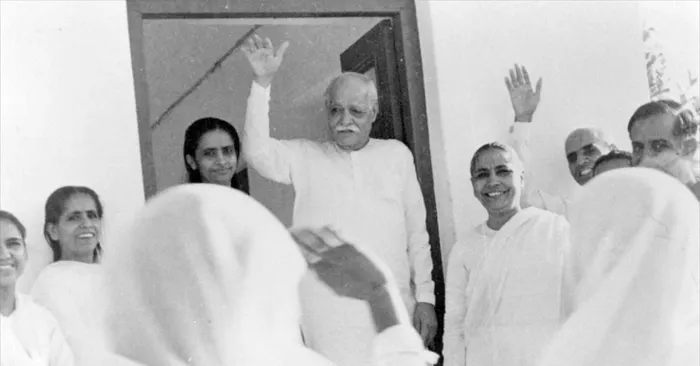
On 18 January 1969, Brahma Baba completed his physical journey. For those who had lived for decades in his direct care and guidance, his absence could naturally have brought many questions.
Who would now guide the family?
Would everyone remain united?
Could the work continue without Brahma Baba physically present?
The answers could not come through an announcement alone. They would have to become visible in the way those who now carried responsibility lived, worked and held the family together.
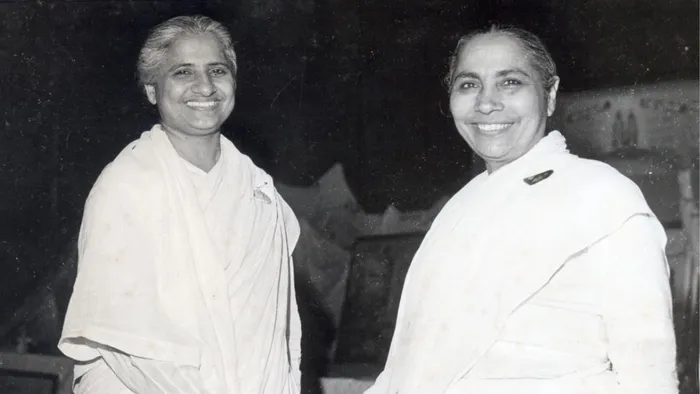
In this new chapter, Dadi Prakashmani and Didi Manmohini emerged as the two principal administrative instruments.
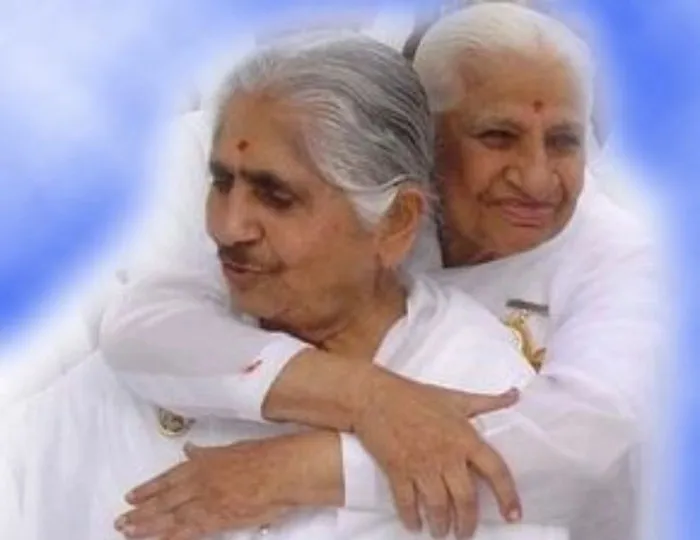
Their relationship became one of the strengths of the years that followed. They consulted one another, respected each other’s qualities and, above all, kept the task before themselves. Within the family, their complementary roles were later described through a simple expression: Dadi Prakashmani was the “mike,” while Didi Manmohini was the “might.” Different in their roles, they remained deeply united in purpose. Those who observed them would remember their partnership in another simple phrase: Two bodies, but one in purpose.

From Unity in Leadership to Universal Brotherhood
Didi's and dadi's partnership reflected a deeper spirit of unity, responsibility and selfless service—values that continue to inspire the Brahma Kumaris initiatives even today. One such expression is the Blood Donation Initiative, where the spirit of giving becomes a practical act of care for humanity.
Explore MoreLeadership With Lightness
Part Four: How Dadi Led — Through People, Not Over Them
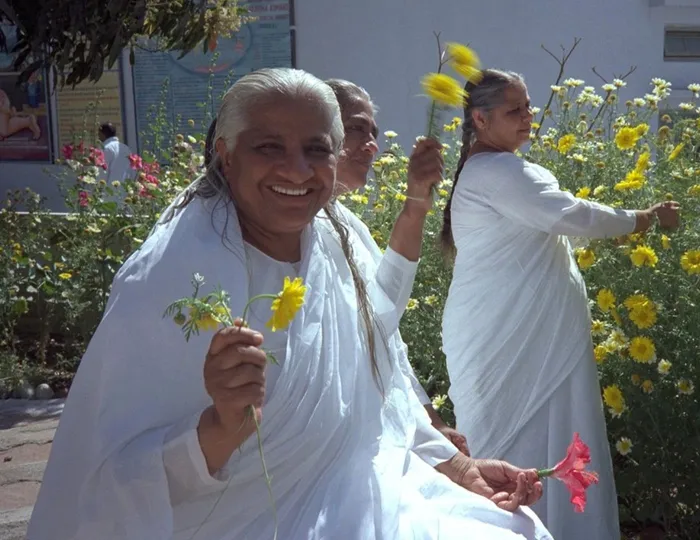
This may be one of the most important aspects of Dadi Prakashmani’s leadership.
As responsibilities multiplied, Dadi continually created opportunities for others. She would notice a capacity in someone, place a responsibility before them and then give them the space to grow into it.
Sometimes, the person herself did not know she had that capacity. One sister remembered Dadi asking her to prepare a press release. Taken aback, the sister replied that she had never written one before. Dadi’s answer was simple:
“There has to be a first day. Consider that day to be today.”
The press release was prepared—and published the very next day.
On another occasion, a sister was asked to help decorate a museum. She did not feel confident at all. How could she take on something she had never done before? But Dadi had confidence in her.
You go. Dadi says you can do it.
That faith that dadi ji should in others was enough for them; Dadi’s trust became the strength with which another person took the first step.
Perhaps this is one of the clearest ways to understand her leadership: she was a leader who created leaders. She did not always wait for people to feel ready before giving them responsibility. Sometimes she gave them responsibility precisely so that they could become ready.
And beneath that ability to bring others forward was another quality equally important to her leadership—the willingness to step back herself.
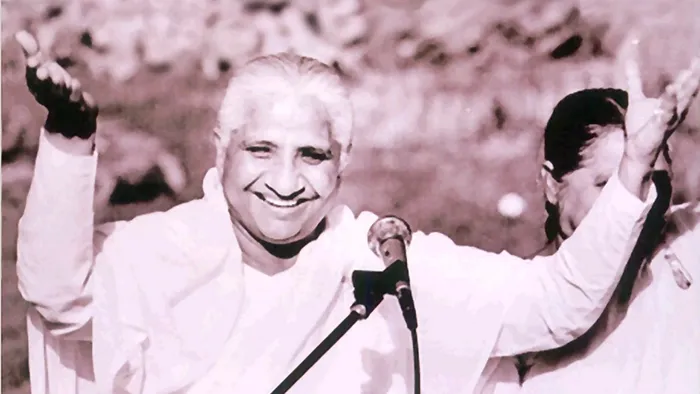
“Pehle Aap” — First You
Dadi carried considerable authority, yet those who lived and worked with her repeatedly saw a simple principle reflected in her actions:
“Pehle aap”—first you. She gave respect to all sisters and brothers which helped bring others forward.
She did not draw attention towards herself or demand recognition. And this simply came from a conviction she carried deeply: the service did not belong to her. It belonged to God.
The consciousness with which she worked was expressed simply:
“God, the Doer, is doing through me. Dadi is only the medium.”
Being an instrument did not mean becoming passive. If anything, it gave her the freedom to take large responsibilities and difficult decisions without needing to make them about herself. When principles were involved, or when the wellbeing of the organization, Dadi could be firm. She once captured the idea of being the head of the organization by saying:
“When you think of yourself as the ‘head,’ you get a headache. When you consider yourself an instrument, the headache disappears.”
For Dadi, leadership was not about standing above people. It was about bringing people forward, helping them grow, and remaining light enough not to stand in their way.
Correct the Situation, Not Condemn the Person
If Dadi’s leadership helped people discover their strengths, it also shaped the way she responded to their weaknesses. Dadi often said that God had given her the responsibility of looking after His children. So when someone had a difficult nature, simply giving up on that person was not an option.
She could not say: This person is like this. Leave them. Her thought was different:
If we leave them, where will they go?
So she walked with people. She accommodated different personalities, helped them move forward and looked for the quality within each person that could be encouraged and used in service. One principle guided her strongly:
“Do not keep anyone’s weakness in your heart.”
Dadi understood something very practical about relationships. If we keep thinking about another person’s weakness, slowly our own vision of that person becomes coloured by it. The weakness begins to appear larger than the person.
For Dadi, every one had a speciality. Her task was simply to find it. Dadi Hridaymohini remembered how naturally this understanding appeared in everyday situations.
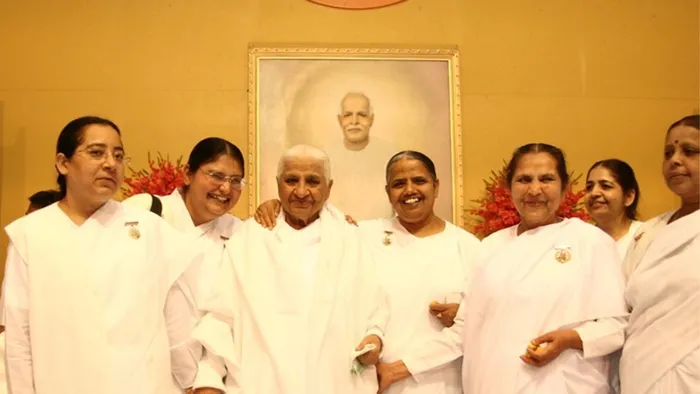
If a younger sister came to Dadi in tears, saying that a senior sister had hurt her, Dadi would first give her enough love to settle her heart. The matter could be addressed. Principles could be explained. If correction was needed, it could even be given in class—but without turning one person against another.
Dadi corrected the situation without allowing the mistake to become the person’s identity. Those who lived closely with her noticed something else. Dadi could point out someone’s mistake quite firmly. Yet a little later, she could meet the same person with complete affection, without carrying the heaviness of what had happened before.
Sometimes people were surprised. How could she behave as though nothing had happened?
Her response could be wonderfully simple:
“What matter? I don’t remember.”
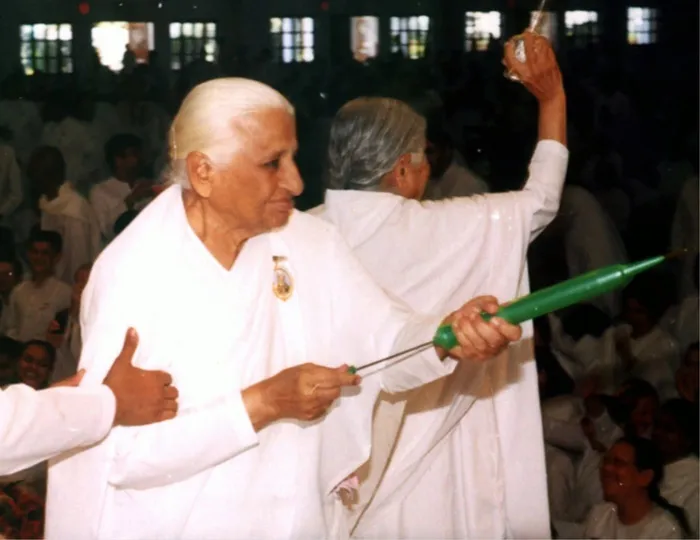
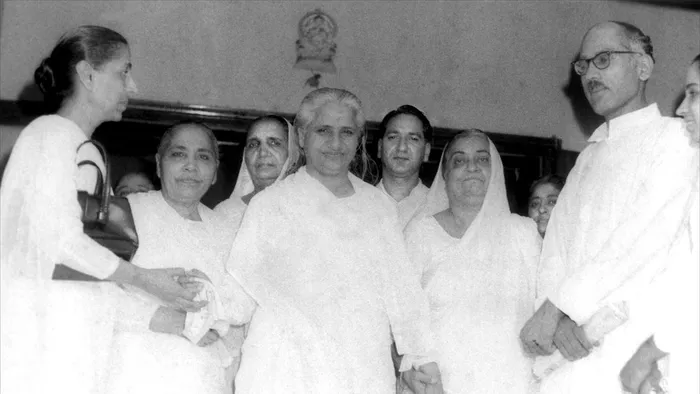
Dadi ji's glimses with other seniors
A Mother to Thousands, Yet Light With Everyone
Perhaps this ability to see beyond people’s weaknesses was one reason so many felt comfortable approaching Dadi. As the Brahma Kumaris grew, her responsibilities increased enormously. Yet access to her did not become surrounded by formality.
People remembered that they could still come to her.
She could sit with children as naturally as she could meet administrators, scholars or public figures. Even when tens of thousands began coming to Madhuban, Dadi still wanted to meet people personally. If she was resting and someone told her that a visitor had come hoping to see her, she would often be ready to get up and meet them. A close companion remembered that Dadi never liked to say: “I have no time.”
If the person responsible for the kitchen needed Dadi to taste something so that the meal would not be delayed, she would respond. For her, these were not interruptions to a more important responsibility. They were the responsibility.
Perhaps that is why people could experience a mother even as the family grew into the thousands.
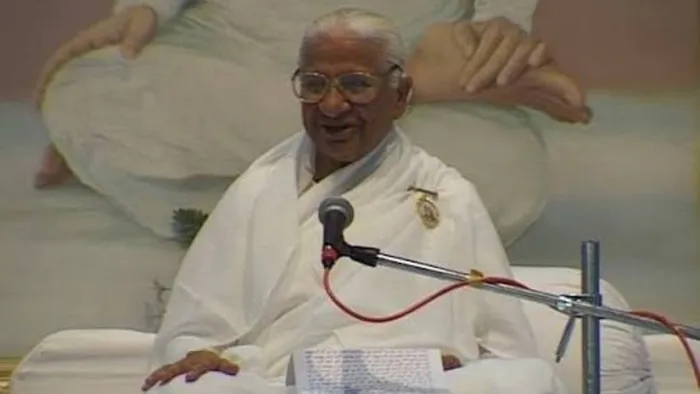
The Murli at the Centre of Her Life
Perhaps Dadi could remain so available to people because, behind all that outward activity, her inner life remained deeply disciplined. At the centre of it was her love for the Murli—the daily spiritual teachings.
Those who served closely with Dadi remembered how carefully she studied it. She would read the Murli before the morning class, return to it during the day and often read it once again at night, however late it might be.
For her, the Murli was not something to be read once in the morning and then put aside. She returned to it again and again, reflecting on its words and bringing them into the way she lived, served and made decisions. And this relationship did not weaken when her body did.
Even when Dadi was in hospital, if someone asked whether she would like to listen to the Murli, the answer was yes. During her final days too, she could still recall lines and explain expressions from it.
Service had expanded across the world, but her inner foundation remained the same as in the early years:
Study. Remembrance. Purity.
Awards- Peace on a Global Platform
Part Five: From a Spiritual Family to World Service
The family Dadi had sustained so carefully continued to grow. Gradually, its boundaries stretched far beyond India, building on the foundation laid earlier in Japan.
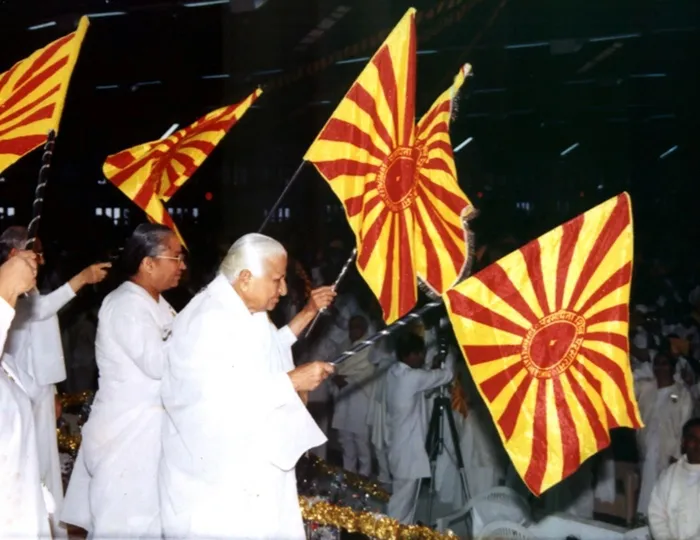
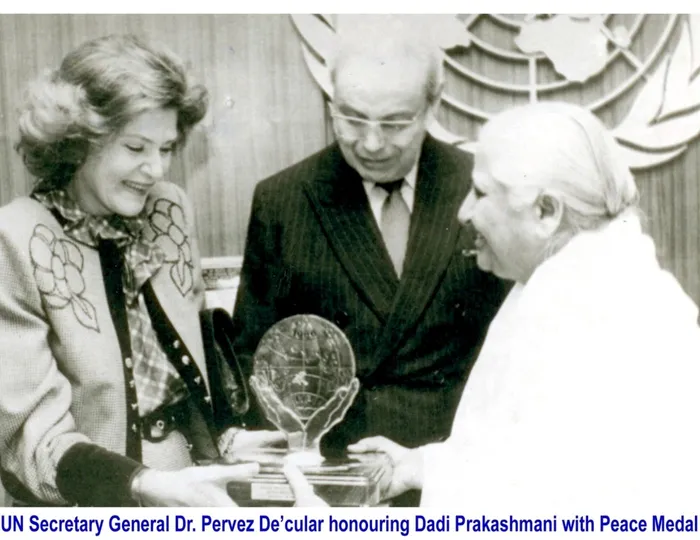
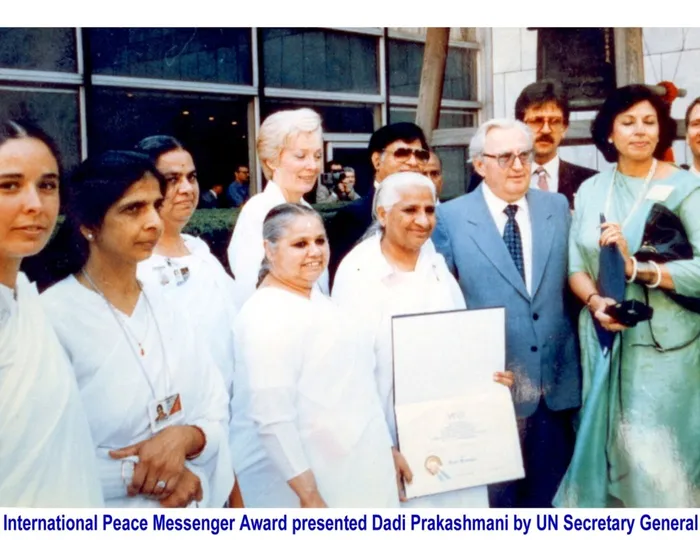
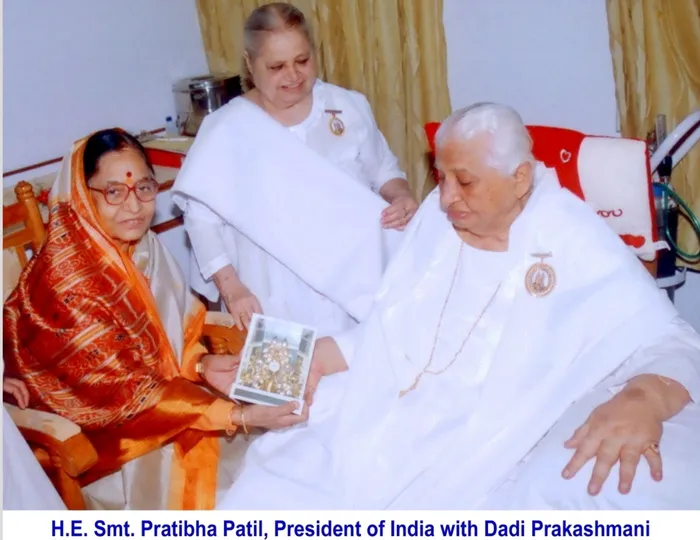
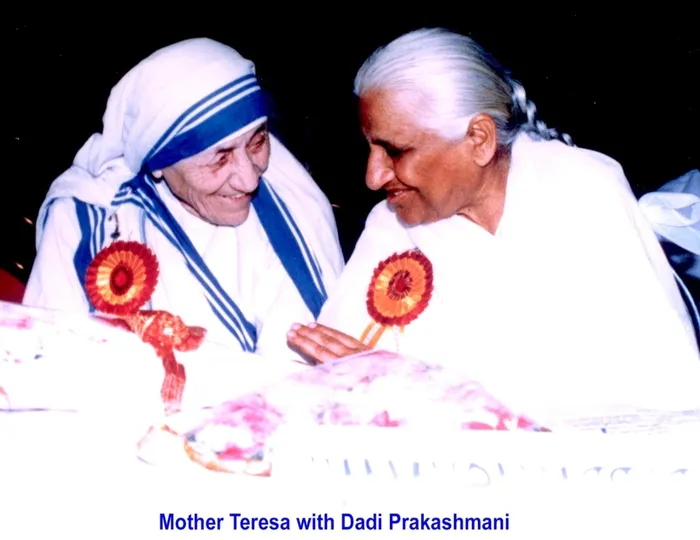
The organisation became affiliated with the United Nations in 1980 and received consultative status with ECOSOC in 1983. The Brahma Kumaris’ institutional history also records a UN Peace Medal associated with Dadi Prakashmani in 1984. Then, during the International Year of Peace in 1986, came an initiative built around an unusually simple idea: if people could not give money or resources to peace, perhaps they could give their time.
The Million Minutes of Peace initiative invited people around the world to contribute minutes spent in meditation, prayer and positive thought. By its conclusion, more than one billion minutes of peace had been gathered.
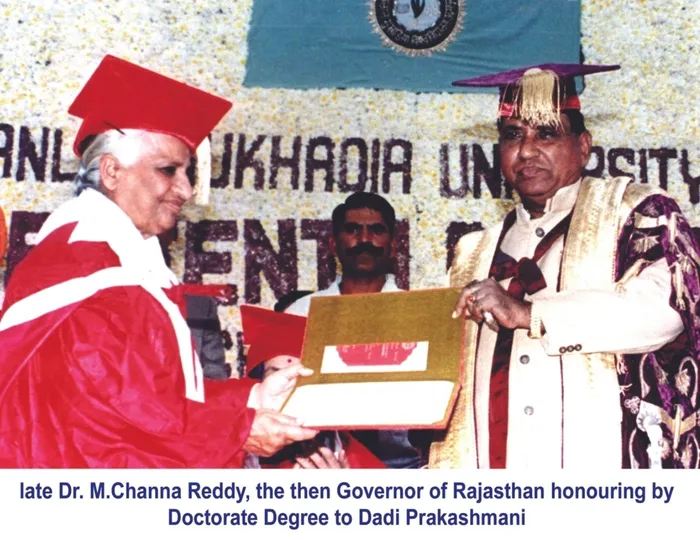
In 1987, the organisation received UN Peace Messenger recognition. Other milestones followed. In 1992, Dadi received an honorary Doctor of Literature from Mohanlal Sukhadia University. The following year, she was invited to address the Parliament of the World’s Religions in Chicago.
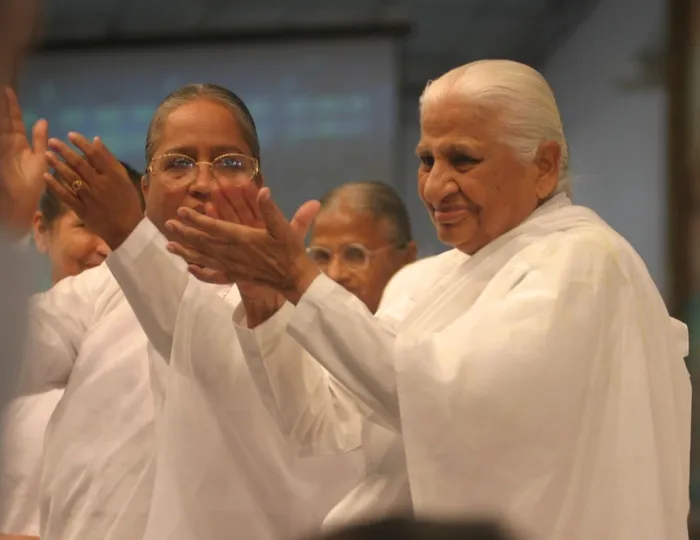
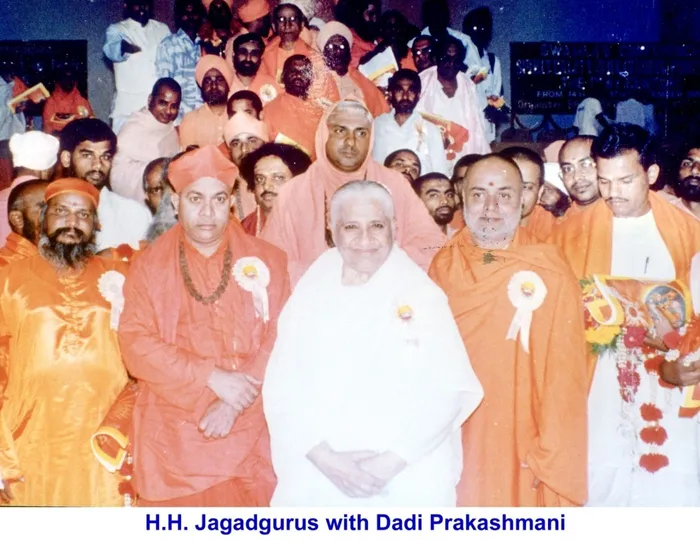
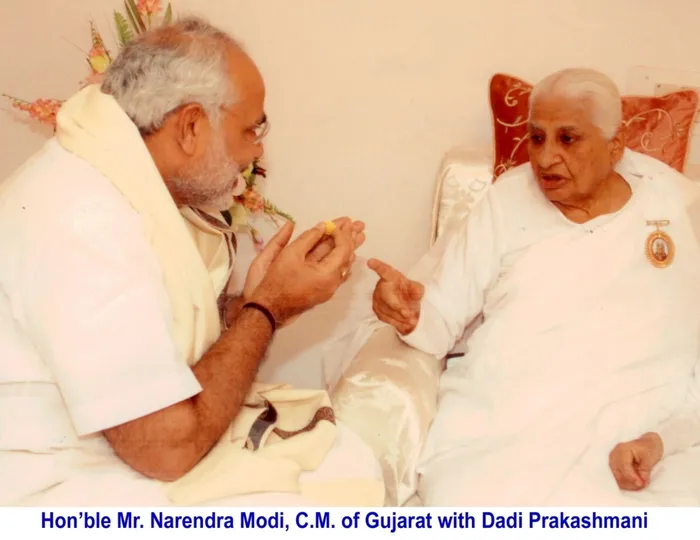
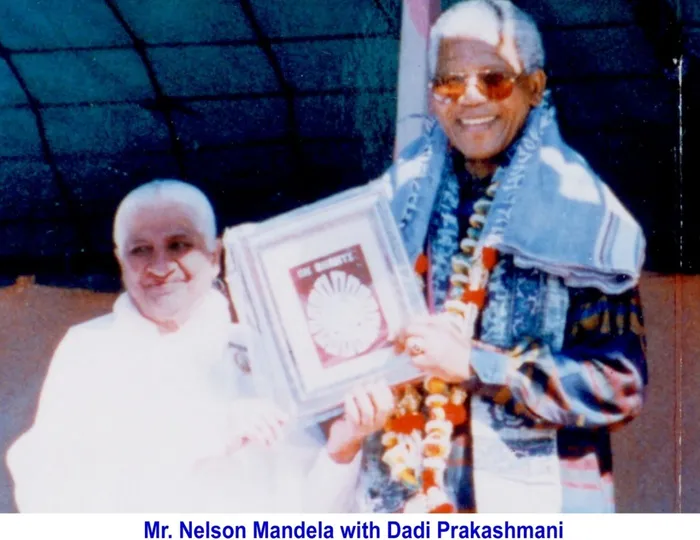
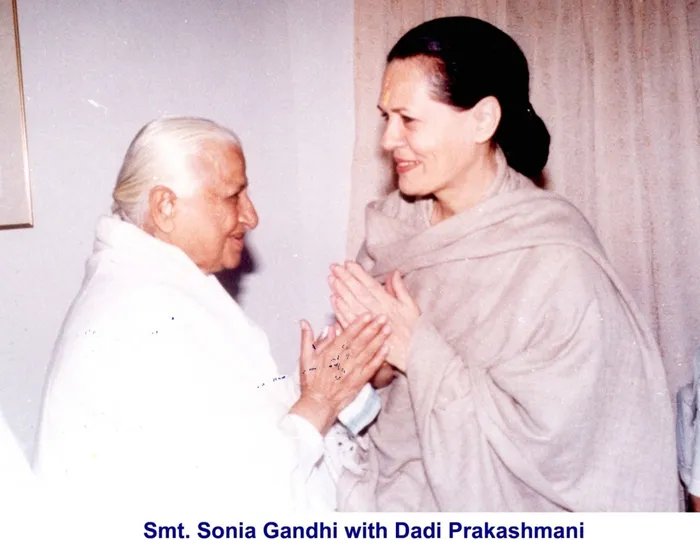
Dadi Prakashmani ji with Eminent Personalities
The Expansion Was Really an Expansion of People
By the later years of Dadi Prakashmani’s leadership, the scale of the Brahma Kumaris had changed dramatically. The organisation’s official profile records that during her lifetime its presence expanded to around 90 countries.
Dadi ji always decentralised responsibility. She trusted others to carry the task. And when they returned from service, she wanted to know what they had learnt.
What is new?
What new plan have you made?
Whom did you meet?
What did they ask?
What did you answer?
These were not merely questions for receiving a report. They encouraged people to observe, think, experiment and grow. If someone told Dadi, “I have never done this before,” her instinct was not always to find someone who already knew how. Sometimes, she even helped that person do it for the first time.
This same principle appeared in what she expected from a spiritual teacher. One of her close students remembered Dadi teaching that a teacher should be spiritually faithful, free from attachment, grounded in study, disciplined and capable of performing different kinds of service. Dadi wanted people to become all-rounders.
To have a speciality was valuable. But a speciality should not become a boundary beyond which one felt helpless.
Trusteeship
For Dadi, attachment was not limited to relationships or possessions. It could hide quietly inside the words “I” and “mine.” Her answer was trusteeship.
Nothing she was caring for belonged personally to her—not a building, a position, a service project or a group of people. Everything belonged to God. She had simply been given the opportunity to care for it for a time. Perhaps this was one of the secrets behind the lightness with which she carried such enormous responsibility.
The work became larger and larger. But she did not need to become larger with it.
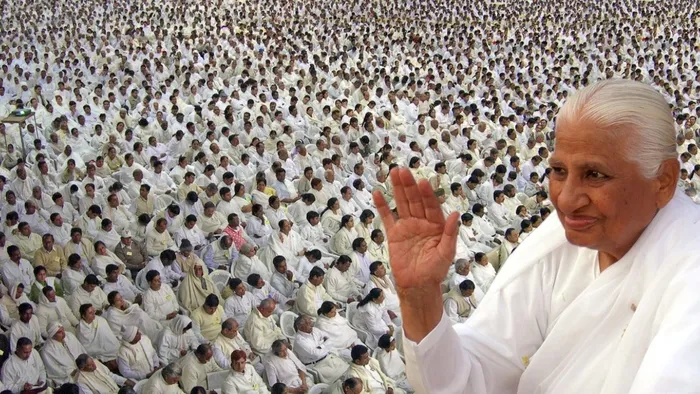
Thirty Thousand People — Yet She Still Wanted to Meet Them
During large Madhuban seasons, tens of thousands of people could gather. One remembrance speaks of as many as 30,000 brothers and sisters. Yet Dadi still wanted people to pass before her and receive drishti.
If someone came to meet her while she was resting, she was often ready to get up. For her, becoming the head of a worldwide institution did not mean becoming inaccessible. Perhaps this is why so many people later expressed the same feeling in different words:
“Dadi was my Dadi.”
Not the Dadi. My Dadi.
There was another reason people felt close to her. Dadi did not require everyone to enter her world before she could connect with them.
With children, she could become playful.
With a young person, encouraging.
With someone carrying responsibility, precise.
With a person in pain, deeply attentive.
With a scholar, she could enter knowledge.
With an administrator, she could discuss structure.
Her approachability was not simply that her door remained open. It was that her mind could come close to the person before her.
“Simple Raho, Sample Bano”
Dadi repeatedly reminded others:
“Simple raho, sample bano.” — Remain simple and become an example.
Her own life made the phrase credible. When those close to her suggested that her old bathroom should be renovated, she was not particularly interested. What existed was adequate. Why make personal comfort a priority?
Her thought was that whatever she did would become an example that others might follow.
That principle appeared everywhere.
If she expected economy, she practised it.
If she expected Maryada, she followed it.
If she expected service, she worked.
If she expected Murli study, she studied.
The authority of her instruction came from precedent.

Turning Personal Transformation into Social Change
Dadi believed that real transformation begins with what we practise in our own lives. That same spirit continues through the Nasha Mukt Bharat Abhiyaan—helping individuals strengthen the mind, overcome harmful habits and take a personal sankalp towards an addiction-free Bharat.
Explore Nasha Mukt Bharat AbhiyaanPart Six: The Inner Journey Became More Visible
The Final Days: “Bring My Glasses, Dadi Will Read Murli”
Near the end of her physical life, the body increasingly required rest. But some of the memories from those days are remarkably ordinary. About a week before she left the body, someone reading Murli reached the line of a song: “Raat ke rahi…”
They asked Dadi what came next. She immediately responded:
“Thak mat jana—do not become tired.”
If a Sindhi word appeared, they could still ask Dadi its meaning and she would explain it. If she became physically tired while listening, she would simply say that they would complete the rest in the evening. And when asked if she wanted to read Murli herself: “Bring the glasses. Dadi will read Murli.”
The girl whose spiritual journey had begun by sitting absorbed in Om Mandali was still, seven decades later, a student.
“I Am Very Happy”
Her companions knew that the body was going through difficulty. Yet when they asked how she was, Dadi would often reply: “I am very well.”
On one occasion she said simply:
“I am very happy.”
Meanwhile, brothers and sisters continued coming. In the final days, some could only see her through the glass of the cottage window. Dadi still wanted them to come in a proper line and receive toli. Even then, she was not asking: Who has come to see me?
Her concern remained: Has the family been looked after?
On 25 August 2007, Dadi Prakashmani completed her physical journey.
But by then, “Prakashmani” was no longer simply the name of one person. Her way of working had entered thousands of lives.
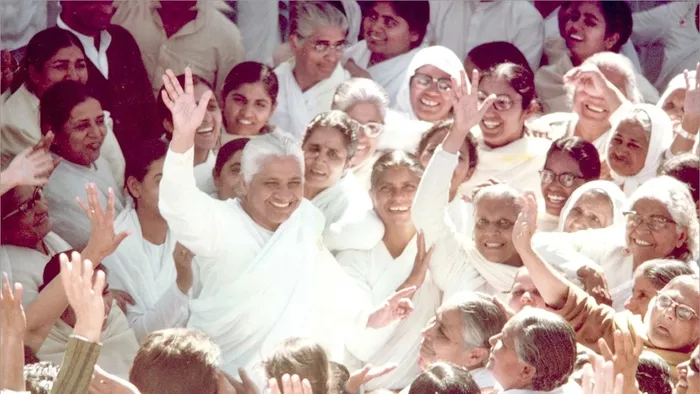
What Dadi Actually Left Behind
Dadi Prakashmani’s legacy cannot be understood only through the number of countries, centres, conferences or campuses that developed during her time. Those are visible outcomes.
Her deeper contribution was a culture of spiritual leadership.
A culture in which responsibility should not become ownership.
A mistake should not become somebody’s permanent identity.
A junior person should not remain junior merely because they have never done something before.
Resources should not be wasted because they belong to the organization.
And expansion should never become more important than the spiritual foundation from which the service began. Her teachings repeatedly returned to the same inner work - Keep the heart clean. Learn a virtue from everyone. Do not carry grudges.
Perhaps the name she received in the early times makes more sense when seen at the end of the journey.
A mani, a jewel, does not create the light. It receives light and reflects it.
That was how Dadi understood her own role. When a programme succeeded, she returned the credit to God.
Baba is Karankaravanhar—the One who acts and inspires action. We are instruments. And perhaps that is why the girl called Rama could eventually carry such a large family without becoming larger in her own eyes.
That was Dadi Prakashmani’s journey. The mani (light) became visible not because she asked the world to look at her, but because throughout her life she kept pointing beyond herself, to God.